


BROWNING — The Blackfeet Tribe is bringing a traditional food source back to the community through a bison products program that tribal leaders say is about far more than putting food on the table.
(WATCH: Blackfeet Tribe reconnects community with tradition through tribally raised bison products)
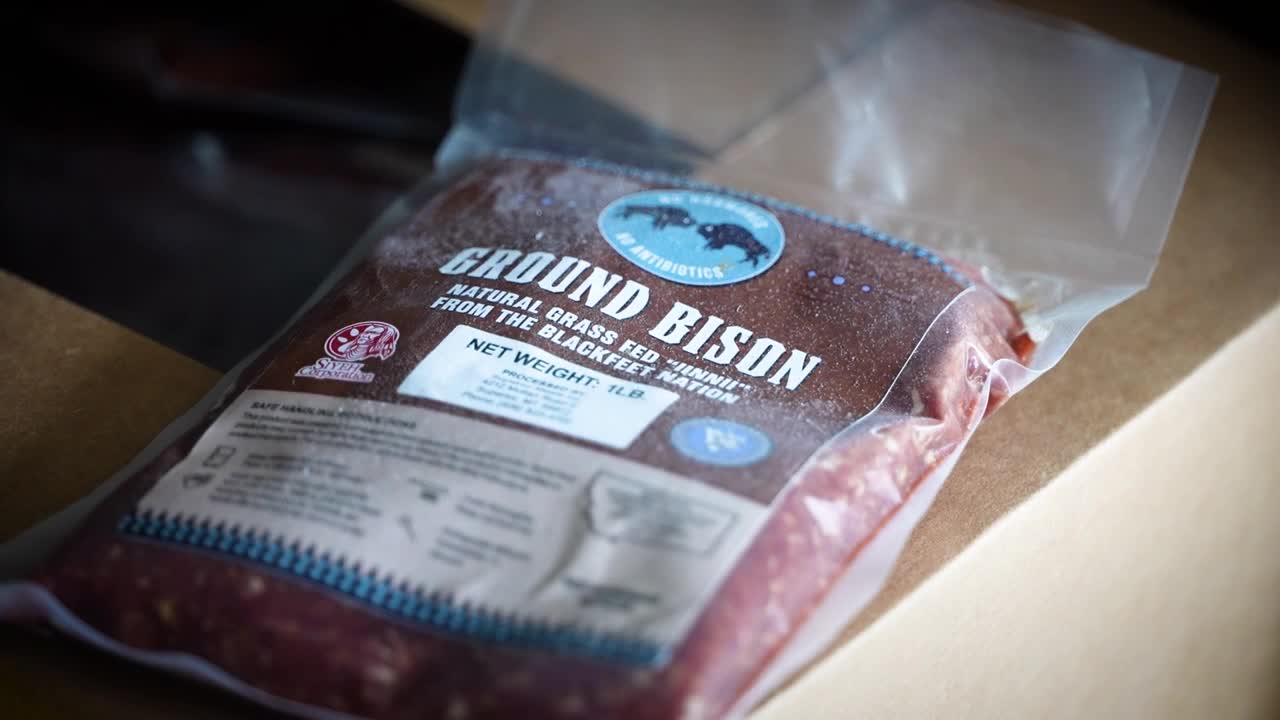
Through Siyeh Corporation, the Blackfeet Tribe's business development arm, bison harvested from the Tribe's own buffalo herd are being processed into products including ground bison, stew meat, pepper sticks and jerky. Leaders say the effort is rooted in restoring a centuries-old relationship between the Blackfeet people and the buffalo while providing healthy, locally sourced food to community members.
Blackfeet Tribal Buffalo Program Director Ervin Carlson said rebuilding that connection has taken time.
"It took a long time for our people even to realize how important they were to us in their life and then also to get back to eating them," Carlson said.
The initiative began about four years ago after tribal leaders asked Siyeh Corporation to develop a bison products business.
"The bison products business is something that the Tribe had asked us to do probably about four years ago," said Mark Magee, operations manager for Siyeh Corporation. "We found the processor that would work for us and with us, developed some labels, with the goal just being to get those products on the shelf and make them available."
Siyeh Corporation oversees many of the Blackfeet Tribe's for-profit businesses and worked with local partners, including the Food Distribution Program and First Blackfeet, to improve access to the products throughout the community.
"We worked with the Food Distribution Program. We worked with Fast Blackfeet, and I think that really helped in giving people better access to our products," Magee said.
The program now harvests approximately 38 to 40 bison each year. According to Magee, the large animals produce enough meat to supply community members while also expanding into local businesses and restaurants.
"We've got some good clients that do some really good products, and it's really good to see it. When you go to the restaurant, you see our stuff on the menu," he said.
Demand for the products has continued to grow.
"Now we have a tough time just keeping up with the requests that we do have," Carlson said.
In addition to retail sales, the buffalo program provides meat year-round to Blackfeet elders and tribal members living with health conditions such as diabetes and heart disease.
While the products support healthier eating, Carlson said the program's greatest success has been restoring a cultural connection that stretches back generations.
"It's really become a passion, not only helping our Tribe bring buffalo back but also to 90 other tribes that are part of the organization," Carlson said.
For Carlson, the work represents something much larger than food production.
"Helping to return and restore a big part of our culture. That's the biggest thing — what it means to us as Blackfeet people here, restoring that big part of our culture. That's the main thing that is really important to me," he said.
Tribal leaders say the program reflects a broader mission of reintroducing iinnii—the Blackfeet word for buffalo—as a meaningful part of everyday life while preserving cultural traditions and sharing the nutritional benefits of naturally grass-fed bison with future generations.
