




HELENA — Human trafficking can happen anywhere—from the biggest cities to the smallest towns, and the victims can be anyone. The Montana Department of Justice is actively fighting human trafficking in the state, and according to Montana Attorney General Austin Knudsen, the department has already seen more than 60 cases this year.
“This is some of the most evil stuff I’ve ever seen,” Knudsen said of human trafficking. “I’ve been a criminal prosecutor, I’ve dealt with rapists, I’ve dealt with murderers, I’ve dealt with a lot of bad stuff, I’ve dealt with a lot of drug dealers—human traffickers are the scum of the earth. These are people who are subjecting people to slavery.”
(WATCH: MTN Investigates: Human trafficking, organized crime and massage parlors)
A human trafficking unit was set up at the Montana Department of Justice Division of Criminal Investigation in 2019. That unit usually sees up to 120 cases each year.
“We spend time searching out those that are victims of human trafficking, try to recover them from those situations, as well as targeting buyers of human trafficking,” human trafficking unit supervisory agent Andrew Yedinak said.
As the unit’s supervisory agent, Yedinak sees human trafficking every day. He said it’s more common than many realize; in fact, most people have probably seen it too.
“I would venture to say that almost every person has witnessed a trafficking situation at some level in their day-to-day life,” Yedinak said.
An organized sex trafficking business disguised as a massage parlor operated on Cedar Street in Helena until 2024—a road the Montana Department of Transportation estimates more than 17,000 cars travel each day.

Montana’s human trafficking unit investigated Oasis Massage for more than a year, and recently, one of the owners, Steven Miller, was sentenced to 10 years in prison, with 5 years suspended.
While Oasis Massage was shut down, there are more illicit massage parlors operating across Montana.
“If I were to ballpark it, I would say probably close to 50 throughout the state,” Yedinak said.
Yedinak said 30-50 women can be trafficked through a single storefront in just one year alone.

“They’re subjected to rape on a daily basis,” he said.
Often, victims are forced to live in these businesses. According to court documents, women were charged $40 per day to live at Oasis Massage.
“Squalor is the best way I can describe it,” Yedinak said of the conditions he has seen in these illicit massage parlors. “Oftentimes, they’re either forced to sleep in the massage therapy rooms, or they’re sleeping in a back room—four to five of them in one room. We’ve worked cases before where a woman was literally sleeping in a closet that was no bigger than she was.”
When it comes to illicit massage parlors, trafficking victims are often asian women, not from the United States. These illegal businesses also have ties that stretch beyond the United States, some to crime syndicates in China.

“It’s an extremely daunting task to know that we’re up against this giant network of this crime that sometimes feels like we’ll never be able to get rid of it,” Yedinak said.
One way Montana is fighting sex trafficking is by cutting demand for it and going after the customers.
House Bill 112, passed during the 2023 legislative session, made soliciting illegal sex acts in Montana a first-time felony.
“I want to send a message to Johns out there, to Montanans who think it’s okay to get online and engage in this behavior—we’re going to catch you and we’re going to put you in prison,” Knudsen said. “It’s no longer a slap on the wrist and a little fine, it’s hard jail time.”
Sex trafficking is just one form of human trafficking seen in Montana. Yedinak and Knudsen both said labor trafficking is becoming more prevalent. Labor trafficking is what it sounds like—people forced into work.
(Watch our extended interview with human trafficking unit supervisory agent Andrew Yedinak)
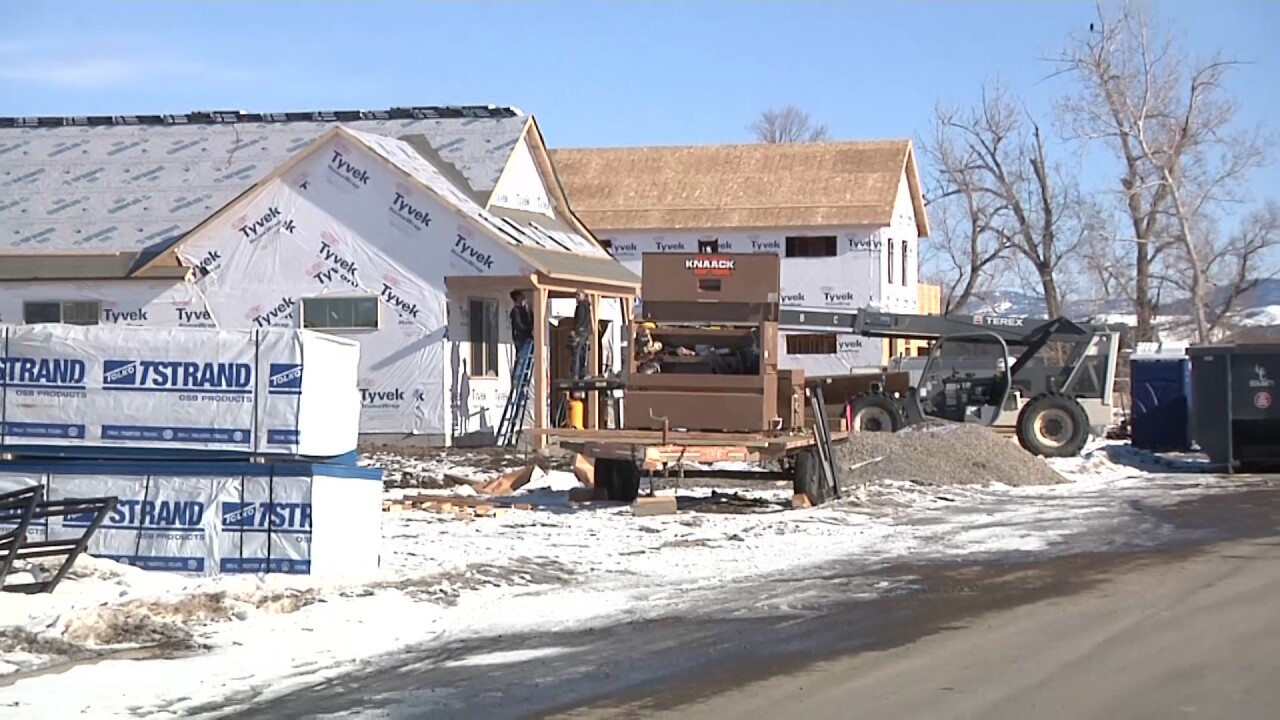
In Montana, labor trafficking tends to be seen in the construction industry.
“They’re being smuggled into the United States, brought here to Montana and forced into the construction industry or other facets of that workforce to provide labor of service for little to no payment,” Yedinak said.
Like victims in illicit massage parlors, victims of labor trafficking are also forced to live in what Yedinak described as “squalor.”
“They’re living in houses—20-30 people in a single house,” Yedinak said. “They’re being charged for things like using the restroom, charged for rent to stay there, charged to use the kitchen, charged for rights to work, charged for use of the tools. All of this stuff adds up, and at the end of the day when they collect their paycheck, they’re actually owing more money than what they’re making back to their trafficker.”
Also like illicit massage parlors, Knudsen and Yedinak said labor trafficking has ties across the border, largely to cartels.
The Montana human trafficking unit has gained some resources, like a victim advocate, and there are nonprofits across the state that provide services to survivors of trafficking, but Knudsen said more can be done to help victims and survivors.
“We’re good at catching bad guys, we’re good at prosecuting them, and we’re good at putting them in prison. We’re not good on the victim’s services side,” Knudsen said. “We don’t do great with treatment, with mental health, with actually getting them back on their feet, back in society.”
As the Montana Department of Justice works to educate lawmakers on human trafficking, Yedinak and his team continue to dismantle operations, one at a time.
“If we’re able to recover a victim, remove them from the situation, and get them the resources that they need so that they can thrive in life going forward, that’s a win to us,” Yedinak said.
When the victim is from another county, DCI says there are a few things that can happen once a victim is removed from a trafficking situation. Federal authorities are always contacted, and victims can be granted a T visa. The four-year visa is specifically designated for victims of human trafficking and provides a path to residence and work authorization. Some victims choose to return to their home county where their families are.
However, Yedinak notes that a lot of what ultimately happens to a victim of human trafficking is often on a case-by-case basis.
"The reality of it is you can only help someone who wants to help themselves," explained Yedinak. "The average victim of human trafficking takes 11 opportunities to leave a life before they will forget it. So if you think about that, that's 11 opportunities of encountering law enforcement or some other victim service organization before they will make that final decision to get away from the life."
If you think you see a human trafficking situation, call it in. You can call your local law enforcement agency, or the Montana Human Trafficking Hotline, 1-833-406-STOP (7867).
Editor's note: This story has been updated with more information about the T visa for international victims of human trafficking.
