


BILLINGS — Montana’s sexual and violent offender registry is undergoing major changes following a Montana Supreme Court ruling that limits what information the state can publicly share, even retroactively.
The decision affects more than 1,100 Montana sexual and violent offenders, 90 of whom are Tier 3, the highest risk offenders to the community. The order removes or reduces long-standing requirements for people convicted before newer registry laws were enacted.
Watch: What families can't see: Montana ruling shrinks sex-offender database
Photos, convictions, and living or working restrictions are no longer publicly available in those cases, prompting concern from law enforcement and community members, such as Hannah Flocchini.
“I love that we have a beautiful community here in Billings,” she said in a recent interview.
Flocchini, herself a survivor of child sexual abuse, regularly checks the state’s sexual and violent offender registry to stay informed about who lives nearby.

“It helps me to be more aware of my surroundings. It helps me to be more cautious,” she said.
But for those like her, that awareness could be harder to maintain.
“Offenders are typically repeat offenders,” Flocchini said.
And what she finds on the registry is changing.
“This is kind of some horrifying stuff that our Supreme Court has put us through,” said Montana Attorney General Austin Knudsen.

Knudsen says a 2023 ruling means over 1,000 offenders on the registry will have identifying information stripped from public view.
Here’s why: The Montana Supreme Court ruled the state cannot retroactively apply stricter sex-offender registry rules to people convicted before those laws were in place.
In the Hinman v. Montana case, the court ruled that Montana went too far by retroactively applying tougher sex-offender registry rules to people convicted years earlier.
The case centered on Richard Hinman, who was convicted of sexual assault in 1994 and originally required to register for 10 years. When Montana later expanded the registry in 2007, adding stricter reporting rules and longer requirements, the court said those changes crossed the line from regulation into punishment and cannot be applied to past convictions.
The charge against Hinman was dismissed, and the ruling now affects more than a thousand offenders statewide.
In the case, two justices said the law violates a person’s right to have civil rights restored after supervision ends. Two other justices agreed with the outcome but said the issue was not properly raised at trial. Two justices dissented, arguing that the registry changes are not punishment and can be applied retroactively.
MTN News reached out to Hinman’s attorney for comment but did not receive a response.
As a result of the ruling, Montana’s offender registry is being rolled back for people convicted before 2007, including Tier 3 offenders who require the strictest registration, monitoring, and notification requirements.

The ruling now removes living and working restrictions for all offenders convicted before 2007.
In addition, photos and convictions are stripped from public view for Tier 1 offenders, while Tier 2 offenders are only required to check in once a year, with no face-to-face visit.
Knudsen has been outspoken about the ruling.
“I think the big takeaway is… they’re more worried about the poor sex offenders than they are about the public and their safety, than the victims of these sexual predators,” he said.
State officials say enforcement efforts continue, even as legal limits tighten.

“We can’t retroactively enforce newer laws on offenders, so yes, they do not have the same requirements,” said Anne Dormady with the Montana Crime Information Bureau. “So we are pushing ahead and making sure registrants are living where they say they are.”
Still, Knudsen warns the ruling creates potential risks.
“Worst-case scenario, you’ve got an individual who has no work restrictions, no living restrictions. Maybe they decide they want to go get a job working at a grade school if this is a child sex predator,” he said.
Flocchini recently discovered a Level 3 sex offender living near a preschool and park in her neighborhood. But because the offender’s conviction occurred before 2007, enforcement options are off the table.
“I believe when you commit a crime of that severity, it’s you who should be inconvenienced, not the general public, not law-abiding citizens, not the innocent,” she said.
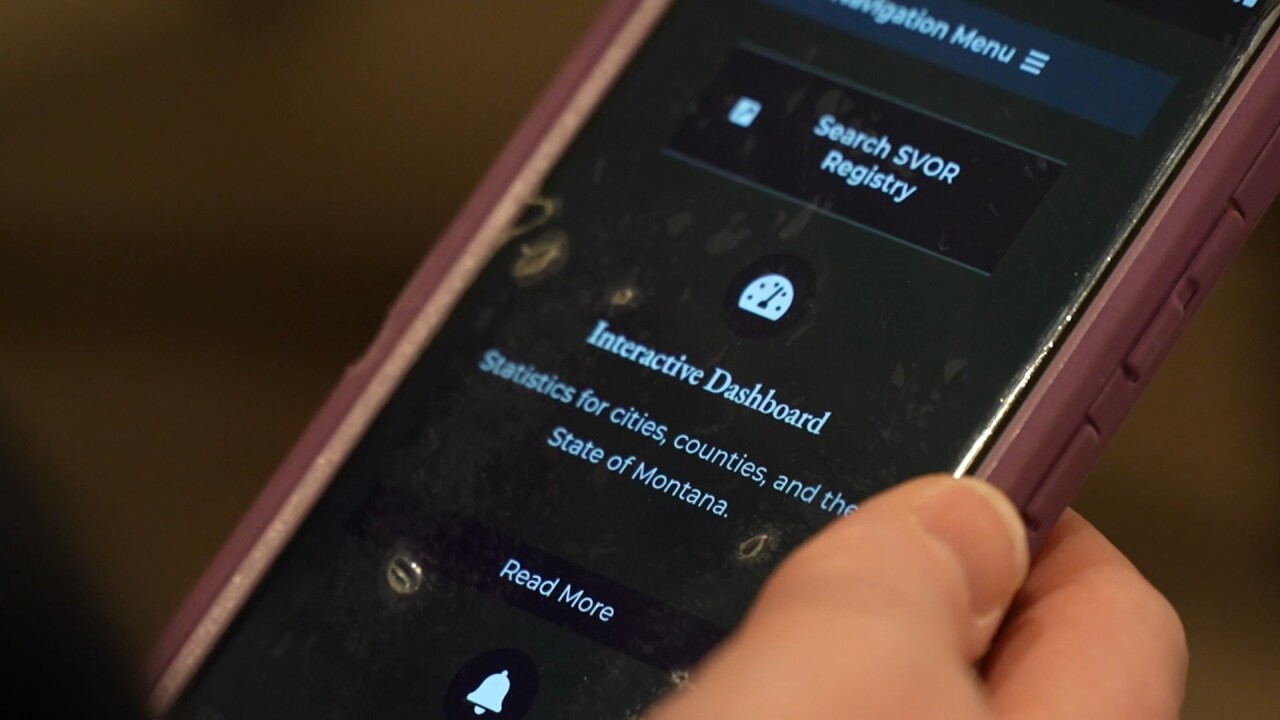
Driven by personal experience, Flocchini says staying informed is now more important than ever.
“We should be the ones to have the most convenience and safety in our lives—not the offender,” she said.
