


FORSYTH — Eastern Montana's weekend heat wave came close to rewriting history, but the National Weather Service says a widely circulated 118-degree reading from Forsyth will not stand as Montana's all-time temperature record.
Learn more about Forsyth's close heat record here:
At Nine Iron Sims in downtown Forsyth, high schoolers Tucker Cain and Braxton Woelich spent much of Sunday indoors instead of outside in the blistering heat.
"It was a hot day yesterday," Cain said. “For Montana being one of the coldest states, too, during the winter, it was kind of surprising it was very hot for being in the summer.”
“Just really hot and exhausting," added Woelich. "Just wanted to go swim and get water.”
Cain, who works there, said the indoor golf simulator has become a popular place for people looking to escape the heat.
"We'll have a lot of people come and golf or play games, and they'll just have their fun," he said.

On Main Street, Carol Anderson saw a similar trend. Her ice cream counter inside her furniture store, The Home Gallery, stayed busy Monday as residents looked for a way to cool off after one of the hottest weekends she can remember.
While the store was closed Sunday, Monday quickly made up for it.
"Yesterday I think it topped it. It was the hottest I've seen it here," Anderson said. "Today we've had a lot of people come in for ice cream ... it's just been crazy."
Resident Serena Barta spent the day inside, hoping her air conditioner could keep up.

"It was just miserable, and the wind was just as bad. I mean, it did not give any comfort at all," she said. "Hotter than Death Valley, I heard. So that's saying a lot too."
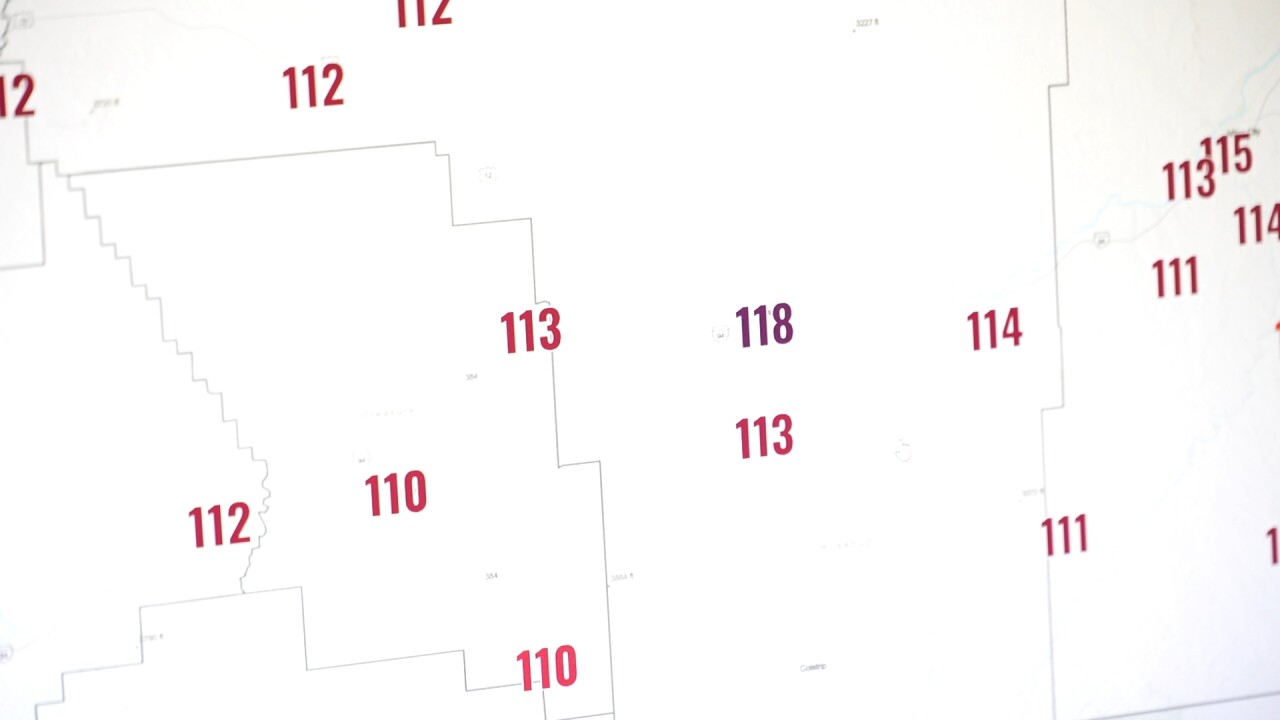
Forsyth's official high temperature Sunday, according to the National Weather Service, was 112 degrees. But weather data posted online from another reading station within town briefly showed 118 degrees, sparking speculation that Montana had just recorded its hottest temperature ever.
Nick Vertz, warning coordination meteorologist with the National Weather Service in Billings, said meteorologists quickly compared that reading with data from surrounding stations.
The National Weather Service relies most heavily on five main Automated Surface Observing Systems (ASOS) located at airports for official climate records, while additional volunteer-operated cooperative stations help fill in gaps between those locations.

Vertz said the station that reported 118 degrees has historically measured warmer than nearby stations.
"That one station has always kind of been a hotspot that's been anomalous compared to everything else around it," Vertz said.
He said the airport's official observing station recorded 112 degrees, and nearby stations were much closer to 112 than to 118.
"So not quite 118," Vertz said.
Even after temperatures are reported publicly, they aren't immediately considered official climate records. Meteorologists compare readings from nearby stations, account for known equipment biases, and verify observations before records are finalized.
"We called 111 for Billings, the 115 for Miles City. That is all still preliminary," Vertz said. "It will go under final review."
That review is conducted by the National Centers for Environmental Information, which determines whether records are included in the official climate archive.
Even without a new statewide heat record, the weekend was remarkable. Vertz said every major National Weather Service climate station in the Billings forecast area broke its all-time high temperature record during the heat wave.
"I think the bigger thing to look at here is just how many records were broken across the entirety of the state," he said.
Forecasters expect above-normal temperatures to continue for the next two to three weeks, although Vertz said temperatures may not reach the same extremes.
"There will be relief at some point," he said. "Just not in the near future."
