

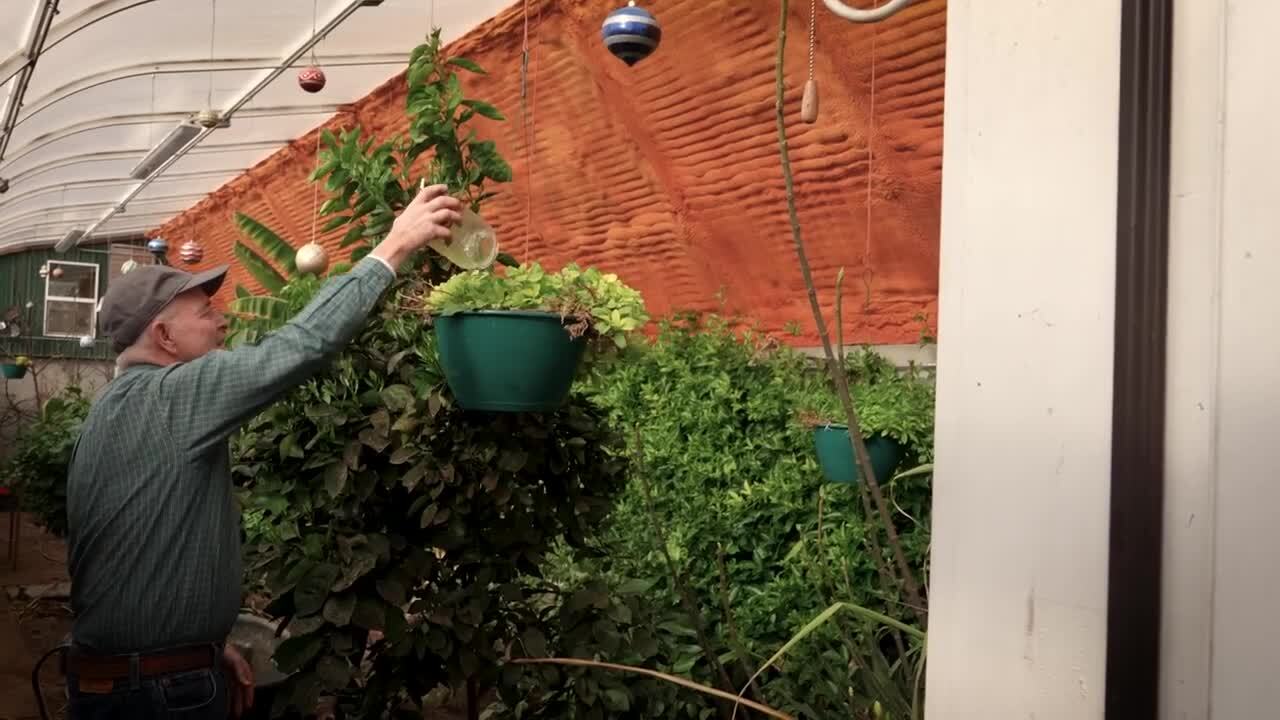


SOUTHEAST OF BIG SANDY — Inside a subterranean greenhouse on a farm outside Big Sandy, Bob Quinn is growing crops rarely seen in north central Montana. Bananas, figs, citrus, and an array of other fruits fill the underground structure… an experiment aimed at testing what can be grown in Montana’s harsh climate.
Quinn, a longtime organic farmer, started the Quinn Institute five years ago to explore what crops might survive in a controlled environment below ground.
Madison Collier reports - watch the video here:
“So here we are five years later with our own experiment underway,” Quinn said.
The greenhouse uses the earth’s natural temperature to help regulate conditions during Montana’s extreme winters. Quinn says the design allows him to test crops that typically wouldn’t survive in the state’s zone three climate.
“We have two rooms here,” Quinn said. “One is for citrus, including bananas and fig trees and sugar cane. And then we have a smaller room for stone fruit like peaches, apricots and cherries that we can’t grow outside here in zone three.”
Not every experiment has worked. Quinn said he once tried growing avocados, but the trees did not survive a deep winter freeze.
Still, the project continues to evolve as the trees mature and begin producing fruit.
The greenhouse is also part of a broader effort through the Quinn Institute, which focuses on researching what Quinn calls “food as medicine.”
“The whole focus and mission of that is healing the earth by growing food as medicine,” Quinn said.
Beyond the greenhouse experiment, Quinn says the project is tied to a larger conversation about how food is produced and distributed in Montana.
“When you have food that’s fresher, grown closer to the markets, minimally processed… it’s better food,” he said.
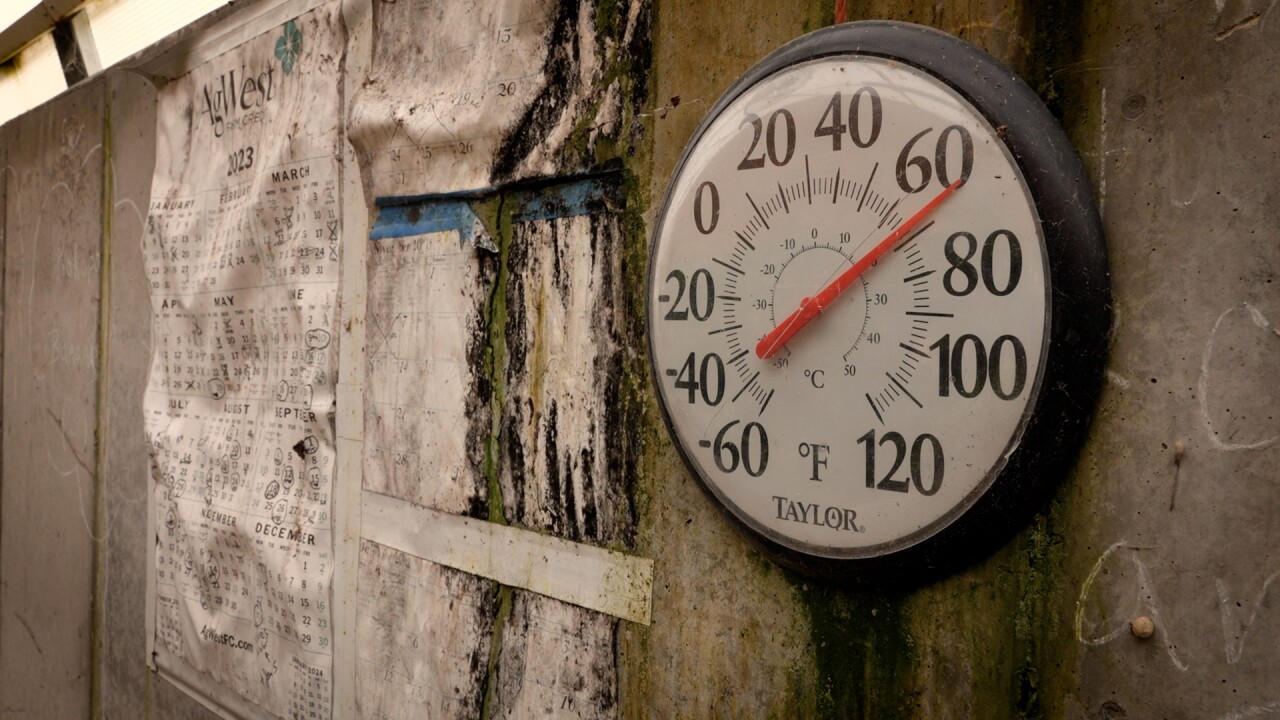
Supporters of local food systems say Montana produces large amounts of agricultural commodities but relies heavily on imported food products in grocery stores.
Organizers working to strengthen local food distribution say the shift has been dramatic over the past several decades.
“It’s something like 70-plus percent of Montana’s food used to come from Montana… and now it’s something like three to seven percent,” said Lyndsay Gutierrez, a director of the Montana Food Hub.
Projects like the Montana Food Hub aim to connect local farmers, food businesses, and buyers so more of the food produced in the state can be consumed locally.

For Quinn, the greenhouse is one small part of that broader effort.
“We don’t need to be depending on far-flung parts of the country to feed us,” he said. “We can feed ourselves.”
As farmers, co-ops and communities continue exploring ways to expand local food production and distribution, Quinn says one thing is clear: food is medicine.
