

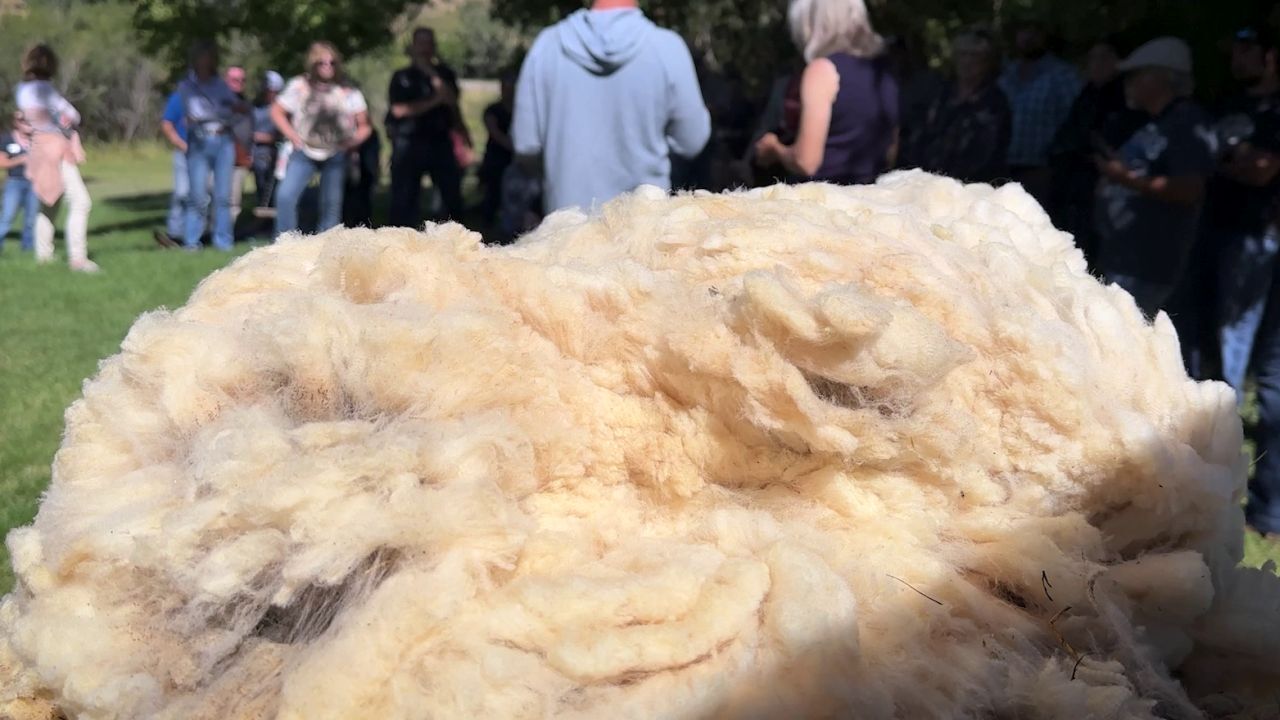


GREAT FALLS — Montana has quietly become one of the nation’s fastest-growing producers of fine wool. From large commercial sheep operations on the plains to smaller ranches near the Rocky Mountain Front, the state now sits at the center of fine-wool production in the Intermountain West.
But despite that growth, much of Montana’s wool still leaves the state before it is ever turned into yarn, fabric, or finished products. A new feasibility study aims to find out whether that could change.
Madison Collier reports - watch the video here:
The Western Wool Growers Alliance has secured $35,000 in grant funding from the National Sheep Industry Improvement Center to conduct the Electric City Wool Mill Feasibility Study. The study will evaluate whether building an industrial wool mill in Montana — with Great Falls among the locations being examined — makes economic, environmental, and logistical sense.
The proposed mill would take raw fleeces and process them into “combed top,” a clean, ready-to-spin wool product used to make yarn for clothing, socks, blankets, and other textiles.
Right now, that step in the process is a major bottleneck for producers.
“Forty percent of raw fleece is dirt, lanolin, and vegetable matter,” said Tracy Roeder, owner of Montana Wool Company and a member of the Western Wool Growers Alliance. “When you figure 1.3 million pounds leaving the Intermountain West for further production, that means over half a million pounds of dirt is being shipped. We don’t ship dirty grain. Our wool shouldn’t leave Montana dirty either.”
Because scouring and combing facilities are limited in the United States, Montana producers often ship raw wool thousands of miles for processing. That means paying freight on material that can’t be used in finished products, an added cost that affects both domestic manufacturers and Montana growers.
Supporters of the feasibility study say Montana’s position as a fine-wool leader has outpaced the state’s processing infrastructure.
“We have the production,” Roeder said. “What we don’t have is the capacity to process that wool locally.”

The study will look at whether Montana can support a modern industrial wool mill capable of handling that volume. Great Falls is being considered because of its access to water, energy, transportation, and existing agricultural processing, but organizers emphasize the potential benefits would extend statewide.
“With Great Falls having the resources it does, it really fits,” said Merrill McKamey, president of the Cascade County Farm Bureau and producer. “But this isn’t just about one town. It’s about serving producers across Montana and the region.”
Advocates say people and partnerships are just as critical as infrastructure. The Western Wool Growers Alliance brings together commercial producers and value-added manufacturers, including companies that already produce Montana-made wool goods. Those connections, McKamey said, help bridge the gap between raw production and finished products.
“Having people close who are leading the way in this industry makes domestic processing really exciting,” he said.
The feasibility study also aligns with broader investments in Montana’s wool industry. A new, technologically advanced Wool Research Lab is currently under development at Montana State University and is expected to open in 2026. The lab will focus on research, testing, and genetic improvement of wool, helping producers raise sheep that produce finer, more consistent fibers.
Supporters view a wool mill as a natural next step, turning research into an industrial-scale application.
“This represents Montana well,” Roeder said. “Historically, but also moving forward. We can lead the way.”
Beyond economics, the proposed mill would also be evaluated for its environmental footprint. Organizers say modern wool processing technology allows for water reuse, lanolin capture, and automation that significantly reduce environmental impacts compared to older mills.
If fully funded, the feasibility study is expected to take about nine months to complete, with final results due in 2027. The study will examine costs, site requirements, workforce needs, and long-term sustainability before any decision is made to move forward with construction.
While a mill is not guaranteed, supporters say the study itself is an important step toward strengthening Montana’s agricultural economy and keeping more value tied to a homegrown resource.
“Wool has a history that spans centuries of being sustainable and useful,” McKamey said. “It has attributes other fibers just don’t provide.”
For producers, the hope is that keeping more processing in-state could shorten production timelines, reduce shipping costs, and make U.S.-made wool products more competitive, all while turning Montana wool into finished goods closer to home.
