

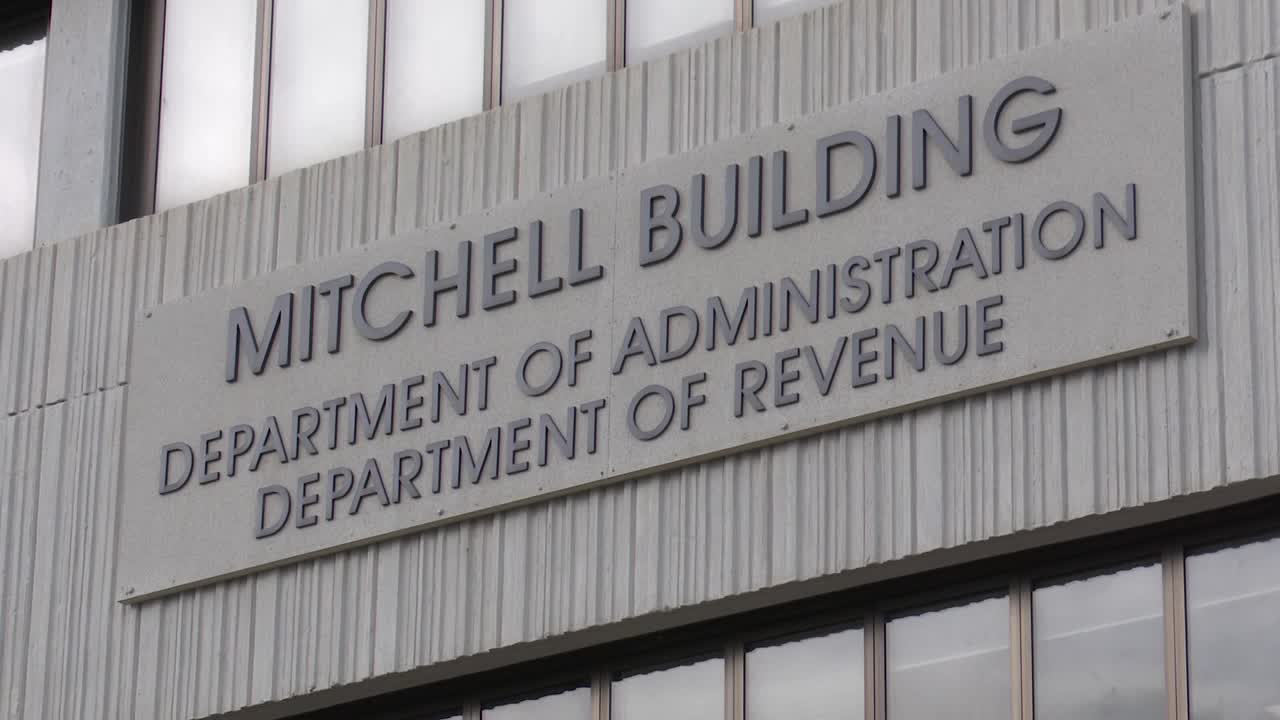


HELENA — The Montana Legislature adopted two bills to overhaul the state’s property tax system in 2025, but this year has been the first time property owners are seeing the full impact of the new “homestead” tax rates. At a legislative committee meeting this week, Montana Department of Revenue leaders said they’ve been hearing a lot of feedback.
“People are keenly aware of what the actual impact of their specific properties are now from those law changes from those two respective bills, so our offices have been fielding thousands of calls and walk-in traffic,” said Bryce Kaatz, compliance executive with the department’s Property Assessment Division.
Kaatz and other DOR staff gave updates about the implementation of the new rates during Monday’s meeting of the Revenue Interim Committee.
(Watch the video for more on the property tax changes.)
The final property tax package didn’t fully take shape until the last days of the 2025 legislative session. In the end, Senate Bill 542 and House Bill 231 set up a temporary tax structure for the first year, with the final system coming into effect in 2026.
In 2025, property tax rates were graduated, meaning parcels that were worth more had higher rates. Starting this year, though, rates were lower for primary residences, long-term rentals and smaller commercial properties, but higher for properties that don’t qualify for homestead rates.
The change has led to frustration from some people across the state. They include LouAnn Hansen, who testified during Monday’s meeting.
Hansen and her husband live in Bozeman but own a small seasonal home in the community of Paradise Cove, near Flathead Lake. It’s a one-bedroom, one-bathroom manufactured building, on a 2,500-square-foot lot, that they’re allowed to use from April to October.
“It's our little piece of paradise,” Hansen told MTN.
In 2025, the taxes on the property rose from just over $1,000 a year to about $1,100 a year, after the assessed value more than doubled. The Hansens were already protesting that increase when the new tax rates took effect this year. As a second home, the taxes on their property rose to almost $2,200 a year.
Hansen said many of the people in Paradise Cove are seniors and longtime Montanans who’ll have trouble making these higher tax payments.
“We are definitely feeling it, and we'll readjust some things so that we can make it work,” she said of her own situation. “But going forward, this does need to be fixed.”
Increasing tax rates on second homes was part of the plan with the new system. State leaders have argued the vast majority of residents will still see lower taxes.
However, even some residents who should have qualified for a homestead tax break on their primary home didn’t get it this year, because they didn’t apply in time. Starting Jan. 1, those people can apply to the Department of Revenue for a refund of the difference in what they actually paid and what they would have paid with the homestead exemption. However, they will have to pay their taxes in full first, before getting the refund.
You can find more information about the refund program here.
While property owners can get a refund on their primary homes, Kaatz said the language of the law doesn’t allow the department to extend that to people who didn’t apply for a lower rate on a long-term rental.
“I would say there is not much latitude in what we can do for those long-term rental properties that did not enroll,” he said.
Tax rates are only part of the picture in determining whether someone’s bill went up this year. The new rate structure reshaped the distribution of taxable value in each jurisdiction. Those jurisdictions then adjusted the number of mills – or $1 on each $1,000 of taxable value – they charge.
The effects of the new system varied widely county to county. The number of mills is the same for all types of property, so in areas where there was a big rise in commercial property value, residential taxes stayed lower because governments got more revenue without having to increase their mills. In other places, like Helena, new local bonds and levies went into effect this year, counteracting the impact of lower rates.
“There’s just a lot of moving parts to try to explain to any one particular property owner why they may or may not have seen an increase,” said Kaatz.
Property taxes are sure to be back on the agenda in the upcoming 2027 Montana legislative session.
“If we thought we had a mandate last session, that wasn't anything compared to what we are up against right now,” said Sen. Becky Beard, R-Elliston.
State law requires the Department of Revenue to calculate what changes to property tax rates would result in statewide taxable value remaining the same next year as it was this year. On Monday, DOR staff told the Revenue Interim Committee that commercial property value rose faster than residential value this year. That meant adopting “taxable-value-neutral” rates would actually require cutting the commercial rate and increasing taxes on residential property.
The committee voted not to recommend a change to rates, both because of that potential impact and because of the assumption that the Legislature will consider broader revisions once the session begins.
Sen. Greg Hertz, R-Polson, made the motion not to recommend a rate change. He is one of a group of Republican lawmakers who has sued over the new property tax system. During Monday’s meeting, he again criticized the process through which the reforms were passed.
“This discussion obviously illustrates what happens when you try to pass a very complex bill, no matter what it is, in a matter of a couple of days, and you don't see all the unintended consequences,” Hertz said.
Hansen echoed that, saying whatever the Legislature chooses to do with property taxes this session, she doesn’t want to see another late decision.
“If it affects every one of us, this is not something that gets left until the last couple of days of the session,” she said.
