

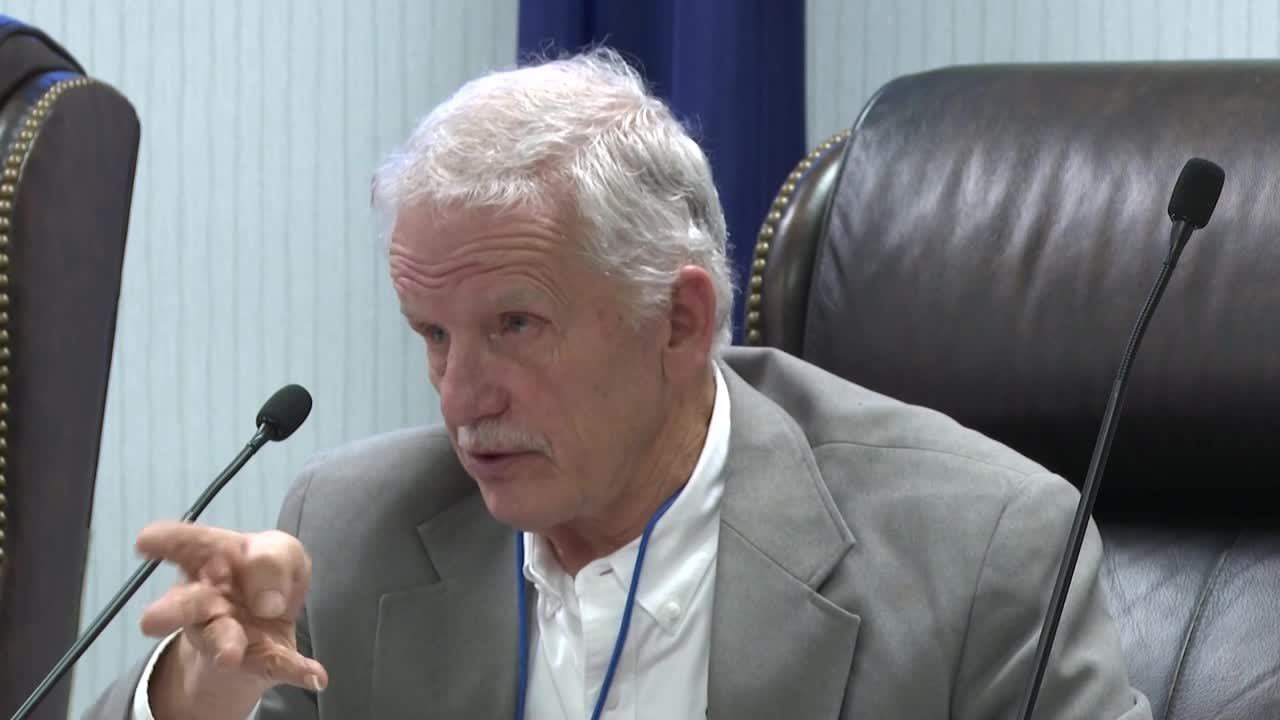


HELENA — This week, the Montana Public Service Commission voted narrowly to take action against their former president, Commissioner Brad Molnar, after a monthslong investigation into his workplace conduct.
In a meeting Wednesday, the PSC voted 3-2 to adopt a 28-page report from the agency’s “response team,” which outlined claims that Molnar made “repeated and unwelcome sex-based remarks,” acted unprofessionally towards staff and retaliated against people who complained against him or investigated those complaints.
(Watch the video for more on the report on Molnar.)
“Misconduct cannot be allowed to continue without meaningful intervention,” PSC vice president Jennifer Fielder said during the meeting. “Everything we've tried has been resisted and failed.”
However, Molnar continues to argue the findings were wrong and the process has violated his rights.
“There was nothing in that report that even rises to the level of proven – or, frankly, disciplinary action,” he said during the meeting.
The report recommends Molnar be required to work remotely and stay away from the PSC offices until he apologizes and agrees to follow the PSC’s internal code of conduct. It also recommends the commission ask Gov. Greg Gianforte to suspend Molnar until he takes those steps – or for up to a year, “a term commensurate with the period of harm and disruption Commissioner Molnar has caused in the workplace.”
This is the latest step in a controversy that has consumed the PSC – the state’s top utility regulators – since early 2025. Molnar announced to reporters in July that he was under investigation for his behavior in the workplace. He consistently refused to cooperate with the investigation, saying he believed it was politically motivated based on his regulatory views, and that it didn’t give him a chance for due process.
In October, the commission voted 3-2 to remove Molnar as president, after claims that he was using his office to interfere with the investigation. They replaced him with Commissioner Jeff Welborn. In those votes – as in Wednesday’s vote – Welborn, Fielder and Commissioner Annie Bukacek were aligned against Molnar, while Commissioner Randy Pinocci supported him.
“This commission is biased against me,” Molnar said during Wednesday’s meeting. “They've been hunting for my head for a year.”
(Read the full report.)
The response team’s report is based on the work of an outside investigator brought in last spring. As released to the public, it does not get into specific details about most of the allegations – with PSC legal counsel saying more detailed reports had to be discussed in a closed session because of privacy concerns for the people who complained against Molnar.
The report says commissioners and staff began talking to Molnar about reports of inappropriate comments and disrespectful treatment of staff as early as February 2025. The first formal complaints came in May, with additional reports coming in through the fall.
The report goes on to argue that Molnar “escalated the situation” rather than engaging constructively, and that he threatened to “take down” people who filed complaints.
The most specific discussion in the report is on one action it describes as part of a “broader pattern of retaliatory behavior”: Molnar’s October filing of an ethics complaint against Bukacek, claiming that she was using PSC resources to work on her private medical practice – as well as a complaint filed against her with the Board of Medical Examiners based on the same allegations.
Both complaints against Bukacek were dismissed, and the report argues the timing and public statements by the parties suggest they were intended as retaliation against her – though Molnar said Wednesday his concerns were legitimate and that he had no involvement with the Board of Medical Examiners complaint.
The report says Molnar’s actions have “caused significant and ongoing harm” to the PSC and agency staff.
“His conduct has generated extraordinary workplace tension, disruption, and instability; consumed public funds; repeatedly diverted staff and commissioners from core duties; and damaged the reputation of the Commission, the agency, and several individuals,” it says.

As Molnar didn’t cooperate with the investigation, the report does not include his perspective, and he said Wednesday he believed at least some of the alleged conduct didn’t happen.
“My contention is nothing in here is proven,” he said. “There was not a name, a date, a witness name, a place.”
During the meeting, Pinocci proposed delaying action on the report to give Molnar time to go through point by point and respond specifically to each allegation. However, on another 3-2 vote, commissioners rejected a delay.
“To me, there is so much here that I can't in good conscience make a decision to not support this motion,” Welborn said. “I think it's time. I think this is a starting point.”
There’s one thing that is still clear: This battle is far from over. During the meeting, Molnar alluded to possible legal action.
“I think for the commission to protect itself from a long protracted, discussion on these at the judicial level, it would be important to say we're not going to have a rush to judgment: What does Molnar have to say now that he knows what the allegations are?” he said. “To say we don't care what he has to say is the same thing as saying, ‘Let's go to court and figure it out.’”
