



HELENA — The internal battles within the Montana Republican Party were again being fought out in a courtroom Monday, as a judge in Helena heard testimony on whether the party’s newly adopted bylaws are valid.
State GOP leaders approved the bylaws last month, during a meeting in Missoula. Supporters said they would help ensure Republican officials are accountable to the party’s platform. However, a group of plaintiffs – including several Republican officeholders and the leaders of two county central committees – filed suit, claiming the rules exceeded the party’s authority and essentially demanded a “loyalty oath” to leadership.
State District Judge Michael McMahon put the bylaws on hold temporarily while the case moves forward.
(Watch the video to see more from Monday's hearing.)
Bylaws are a political party’s internal rules. Jeff Essmann, a former state lawmaker and Montana Republican Party chair and one of the plaintiffs, described them Monday as the party’s “constitution.” They establish how the party chooses its officials, endorses candidates and formulates its platform.
Jennifer Fielder, a member of the Montana Public Service Commission, led the Montana GOP’s rules committee, which proposed the changes to the bylaws. She said in testimony Monday that they had long been in need of a significant overhaul, to improve clarity and resolve inconsistencies.
While there were many minor changes, the most notable revisions had to do with party membership. The new rules require any Republican in elected office to sign an affirmation of support for the state party and pay $20 a year in dues in order to participate in party events or vote for leadership. It establishes a procedure for challenging the membership of – and potentially removing – a party member who acts “inconsistent with the party’s bylaws and purpose.”
Plaintiffs raised particular concerns about what that would mean for the members of county central committees: the lowest-level party officeholders, elected in each precinct during the state primary elections. They’re responsible for representing the party’s interests locally, choosing members of the state central committee and nominating candidates to fill vacancies in the Legislature or partisan local offices. The plaintiffs warned that, under the new bylaws, the state party could engineer the removal of precinct committee representatives – essentially nullifying their election.
Fielder said Monday the new bylaws were not intended to overturn election results, but to promote party unity. She said many current candidates in GOP primaries were not truly Republicans.
“That idea that now we have this mechanism where we could actually ensure that the members were actually Republicans that do support the party and we're all working together for the principles that unite us – that was an idea that drew just a big round of applause,” she said. “People wanted this, they needed this.”
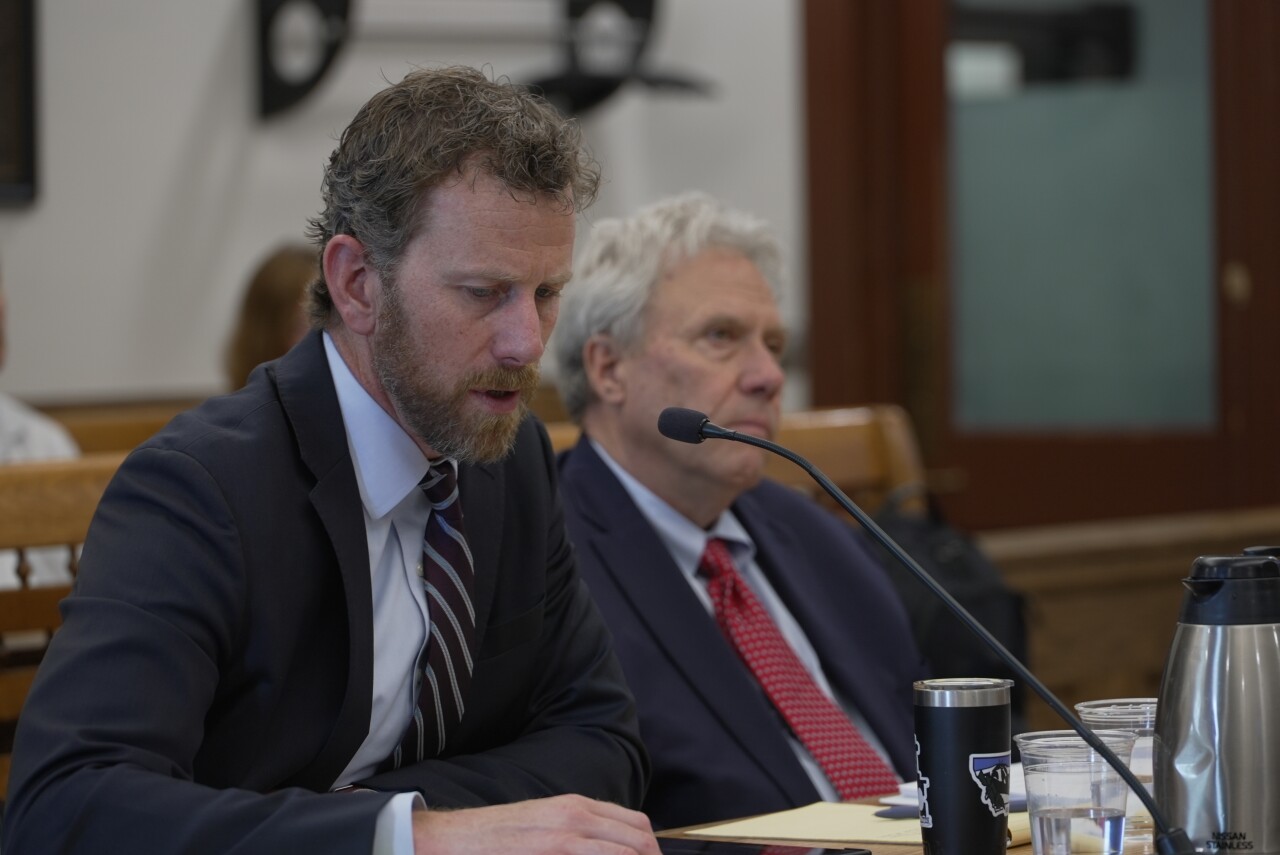
But Essmann said the changes were centralizing power at the top. He said he saw the requirement of dues and a statement of support as “compelled speech” that went against a provision in the Montana Constitution that said elected officials couldn’t be required to take another oath besides the standard oath of office as a qualification of holding their position.
“From my perspective, this is an attempt to let the existing state party leadership select its own voters, and I think that is antithetical to Republican principles of bottom-up power,” he told MTN.
The new bylaws required two-thirds support from party delegates to pass, and they received well over that. However, several plaintiffs said Monday that they did not attend the Missoula meeting because they did not expect such large changes to be on the table, and they questioned whether the party provided enough notice. Fielder said the revisions were not finalized until shortly before the meeting and that they were not required to make the specific changes public days in advance because the proposal came from the rules committee.
The Montana Republican Party has been dealing with infighting and factional splits for several years. In the 2025 legislative session, the state party’s executive board censured a group of nine GOP senators who broke with their party leadership and sided with Democrats on a series of key votes. Party leaders announced they no longer considered “The Nine” Republicans, and during the state party’s convention last summer, delegates voted to prevent them from participating. Several of the senators sued trying to challenge their removal.
During the 2026 legislative primaries, the state party endorsed a slate of “Honor Roll” candidates they said were in line with conservative principles, including 14 challengers to incumbent lawmakers.
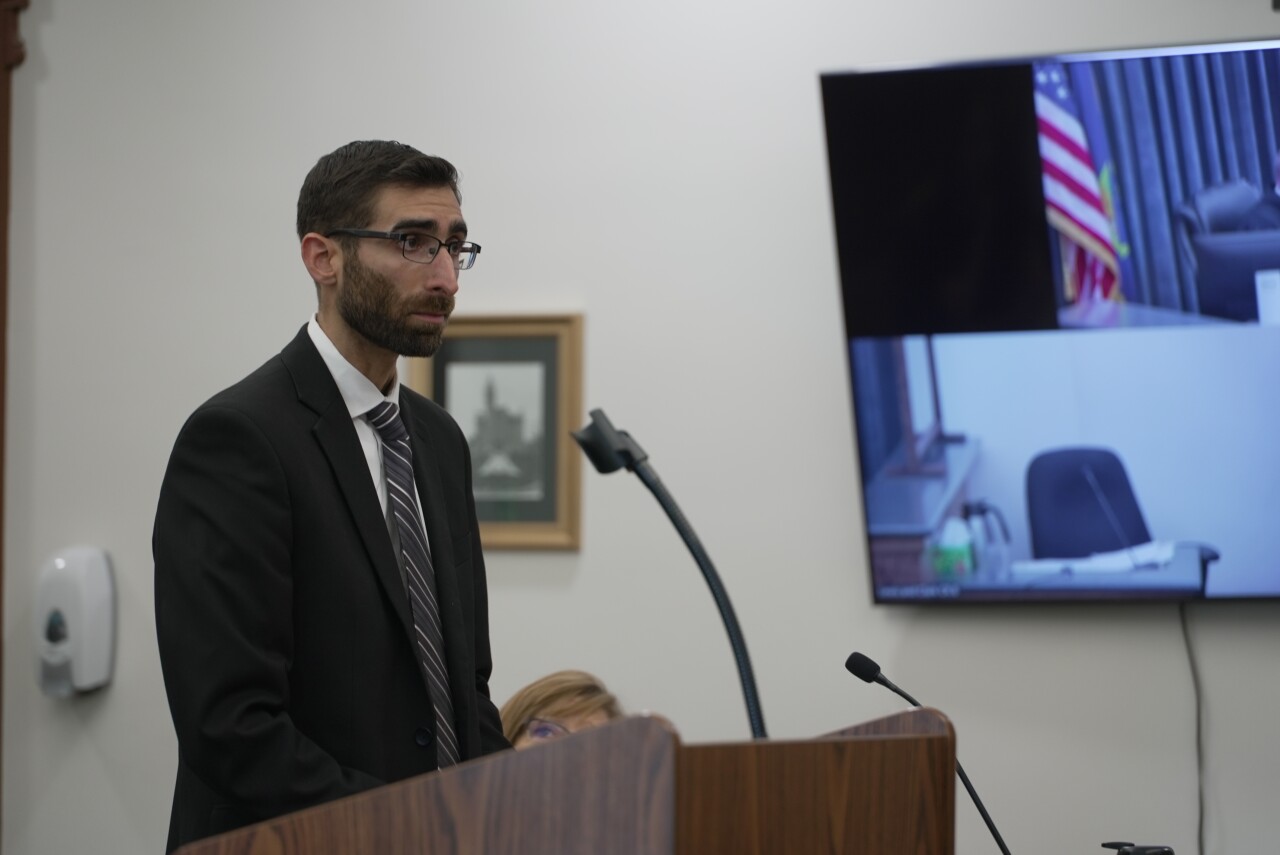
Justin Oliveira, an attorney representing the Montana GOP, told the judge Monday that this is an issue about a political party – a private organization – establishing its own rules for who it chooses to associate with.
“These disputed membership provisions, they exclusively concern internal affairs of the party,” he said.
But Mike Talia, an attorney for the plaintiffs, said the party’s actions have impacts beyond the private sphere because of central committees’ established public roles – like selecting candidates to fill vacant positions – and because the party chooses to pick committee members through state-run elections.
“The fundamental question for every Montana Republican to decide for themselves is who do they want their elected officials to be responsible to – to them, the voter, or to the party?” Essmann told MTN. “It’s a dichotomy; it’s one or the other.”
McMahon questioned Oliveira over whether a Republican governor could be subjected to “these draconian disciplinary provisions” if he vetoed a bill with wide support from GOP lawmakers, and whether the new rules could discourage Republicans in the Legislature from working across the aisle.
“Why should anybody be looking over their head or behind their back when they're trying to do their job in the Legislature to serve their constituents, worried that the GOP is going to come and hammer them?” he asked.
Oliveira said those examples are hypothetical, and that the plaintiffs’ claims of potential harm are also hypothetical.
McMahon took no immediate action after Monday’s hearing, though he indicated he might narrow the temporary restraining order against the bylaws to only apply to the specific sections at issue. He gave both sides two weeks to submit additional briefs in this case.
