

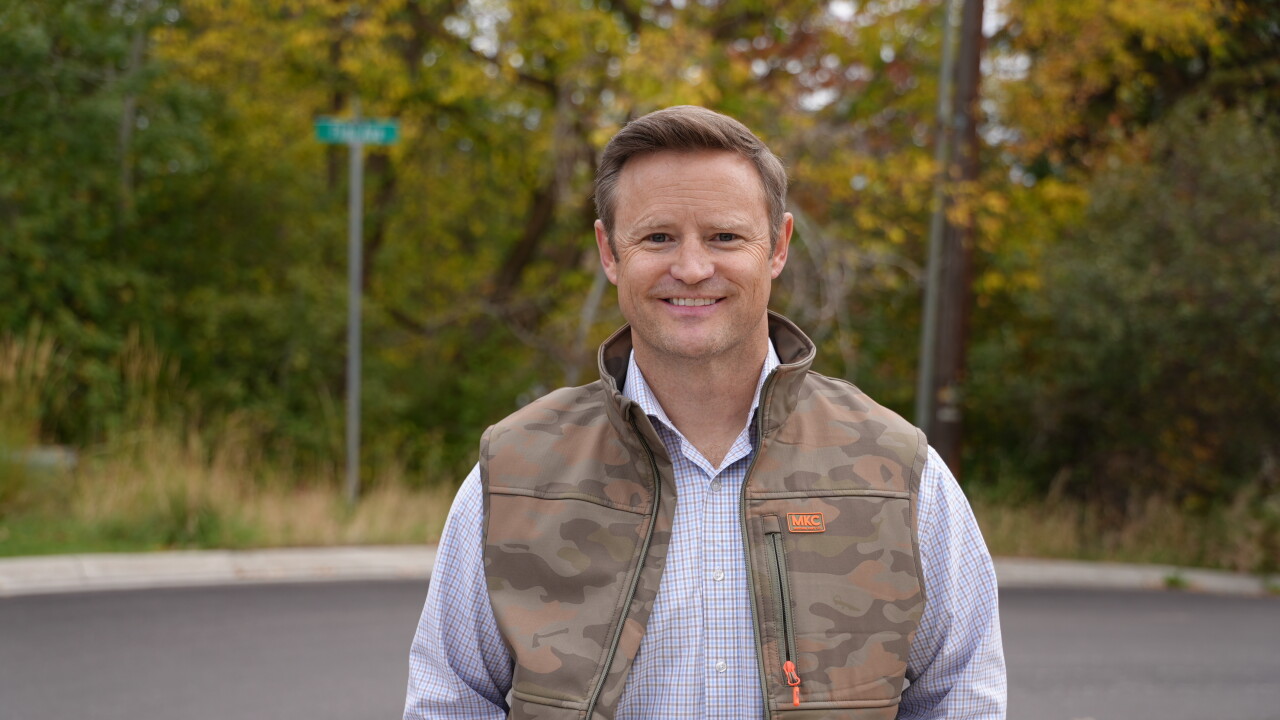


WHITEFISH — Aaron Flint says he and his family have deep connections to western Montana – connections he says you can still see on a short street on Whitefish’s west side, called Flint Avenue.
“This is where my great-grandpa lived, my grandpa lived here, my dad lived here, and of course, I lived here in Whitefish a lot as a kid as well,” he told MTN.
Flint’s parents divorced when he was a child, and his mother moved to Glasgow while his father stayed in the Flathead. He remembers going back and forth between the two.
“Some of my best memories were my mom would sometimes throw my brother and I on the Amtrak train and we'd get off right down at the depot here in Whitefish, whether it was Christmas time or sometimes coming for the summers to see my dad,” he said.
(Watch the video to hear more from Flint.)
Flint, 46, was back in Whitefish earlier this month for Whitefish High School’s homecoming. His son is a senior on the WHS football team.
“To me, it's just so incredible to come back here,” Flint said.
Flint and his wife have three children. The family moved to the Flathead last year, after years living in Billings – a move Flint said brought them closer to his wife’s relatives in Missoula.
Flint served more than 20 years in the Army National Guard and the Reserves, including combat tours in Iraq and Afghanistan. While he is a first-time candidate, he was closely involved with Montana politics for a long time – spending almost 20 years hosting a statewide radio talk show.
“That's why people know they can trust me, because I've been consistent,” he said. “I've been a consistent conservative on the airwaves.”
While in Whitefish, Flint also rallied a crowd of supporters outside the U.S. Customs and Border Protection station, in support of the Border Patrol and federal immigration enforcement. He said it was intended as a counter to protests at the facility last year over Border Patrol arrests in the Flathead.
“Common sense backs the blue,” he told the crowd. “We back our sheriff, we back our local police officers and law enforcement – and heck yes, we back our Border Patrol agents and the incredible work that they're doing out here.”
The 1st Congressional District covers western Montana, including Kalispell, Missoula, Butte and Bozeman. Flint is the Republican nominee to replace U.S. Rep. Ryan Zinke, and he has received Zinke’s endorsement. Democratic candidate Sam Forstag and Libertarian candidate Nick Sheedy are also on the ballot.
Recent polling has shown a very close race between Flint and Forstag. Now, Republicans and Democrats have both identified the 1st District election as a key race in the nationwide battle to control the U.S. House.
The national interest in the western district was demonstrated when President Donald Trump announced a campaign rally in Kalispell this Wednesday, in support of Flint and other Montana Republicans. In addition, media reports have said Speaker of the House U.S. Rep. Mike Johnson, R-Louisiana, is planning to stump for Flint later in the month.
In his campaign, Flint has taken an approach Republicans like Johnson are adopting across the U.S.: seeking to portray themselves as more in line with their districts’ values and to paint their Democratic opponents as too liberal.
“This is the commonsense campaign; the other side represents the crazy,” Flint said. “If there were a race in the entire country right now that symbolized common sense versus crazy, this is the race right here in western Montana.”
See Aaron Flint’s extended answers on specific issues:
Should the federal government be putting more restrictions on data centers?
“First off, when it comes to data centers, I think we've got to make sure that we can't have these data centers in Montana if they're going to drive up our electricity rates or consume all of our water resources or foul our Montana way of life. So we've got to make sure that that doesn't happen here in Montana, but we've also got to make sure that if there's localities here in Montana that are eyeing these opportunities, whether it's on the Crow Reservation or in Butte, local folks have to have the ability to say no to these things. So first and foremost, I think that's where we've got to say clearly that's what we can't have here in Montana. But I believe those need to be local decisions; I think locals need to be the ones. I think if we cede that ground to the federal government, the last thing we want is a federal takeover of our water and our energy resources here in Montana.”
Should local communities have an absolute right to say no to construction in their area?
“State and local, I think the legislature will definitely be tackling this issue when it comes up. But I'll tell you, my job as congressman, I'll fight to make sure that these decisions are made by Montanans and not forced on us by folks in Washington, D.C.”
Are there actions Congress could be taking to help improve the supply of accessible, affordable housing in Montana?
“Absolutely. Big government is a big part of why we have this affordable housing crisis, not just here in Montana, but all across the country, frankly. 30% of the cost of a home is due to big government regulations and red tape. But a big thing I think we can do in Congress – and this is why I've got the endorsement of the carpenters’ union, we had a great event in Butte, where we had the ironworkers’ union on hand for that endorsement from the carpenters’ union – our support for trades and trades education, and the fact that we have got to get a shop class in every high school in Montana – or if we can't get a shop class in every high school, let's get a class in every shop.”
Are you supportive of the more aggressive federal immigration enforcement we’ve seen under the Trump administration?
“We had something like 30 million criminal illegal aliens flood into this country – a lot of ‘bad hombres’ that even came right here into Montana committing horrific crimes: rape, murder, drug dealing offenses, and they deliberately especially targeted Indian Country and our Native American Indian reservations. We've got to get every single one of these ‘bad hombres’ out of Montana and out of the country. Frankly, it's contributed to the affordability crisis as well – you import 30 million criminal illegal aliens into this country, of course it's going to drive up housing prices, of course it's going to drive up inflation.”
Do you think the Trump administration’s tariff policy has been successful?
“First off, I don't want us tariffing other countries, and I don't want other countries tariffing us. What we've seen from the other side, from the other party, is they have no problem with tariffs when other countries are tariffing us. They only seem to complain when we retaliate in response. I think especially when you're seeing the success from the Ukrainians right now, in particular, I think our fight and our push to have tariffs put in place against Russian palladium – I think we need to continue the fight in that regard, because look at what we had happen here in Montana: 700 mining jobs, many of them union jobs, including my cousin who's an underground miner at the Stillwater mine – who'd rather be mining in western Montana, by the way, which is why we need more mining opportunities here in western Montana – but basically, the Democrats allowed Russia to dump palladium into the United States of America, killing 700 mostly union jobs here in Montana. And then what did they do with that money? They used that money killing American jobs to then go kill innocent Ukrainians. So that is one component that we've got to continue to aggressively fight for, as we fight to end these forever wars.”
Should anything be done to help Montana businesses who say they’ve been harmed?
“Absolutely, I think whatever we can to support small businesses, whatever we can do to support manufacturing, our farmers and ranchers. In fact, before I even jumped into this campaign, I've been on the radio for nearly two decades now here in Montana. And that's why people know they can trust me, because I've been consistent, I've been a consistent conservative on the airwaves. I have been consistent that we have got to up the aid packages for our farmers and ranchers, especially right now – look, if we lose a family farm or a family ranch, we'll never get them back, especially with what's been going on with housing prices and land prices. So we've got to do whatever we can to keep those producers in business and keep them profitable.”
Do you want to make any changes to the tax policy Congress passed in the “Big Beautiful Bill” last year?
“Being right here in Whitefish right now, my great-grandpa was a railroader here in Whitefish. And one of the things that was left out of the Working Families Tax Cuts – there were several great things in the Working Families Tax Cuts: Social Security tax relief, no tax on tips. When I talk about making the Montana dream affordable again, tax relief is one of the best things we can do – permanent tax relief to make the Montana dream affordable again. I waited tables and bused tables and washed dishes in high school and then in college. My mom was a hard working single mom who worked as a waitress when I was a kid. So no tax on tips and no tax on Social Security is very important to me; we need to make that permanent. Some of those provisions expire in 2028. We need a member of Congress from Montana who's going to fight to make that tax relief permanent. But back to the railroaders here in Whitefish: Railroaders were not included in the no tax on overtime. I want to fight to make sure that railroaders are included in the no tax on overtime as well, because, as somebody who grew up crisscrossing Highway 2, hopping on the train from Glasgow here to Whitefish and back and forth, I know how important those railroaders and their families are here to Montana. So I'm going to fight to make sure that they get included in the no tax on overtime relief as well. My opponent, this far left lobbyist from Portland, said he would repeal H.R. 1, he would have repealed this package of tax relief for hardworking families. So a very clear distinction between a fifth-generation combat veteran who knows what it takes to fight for working families, versus this far-left socialist lobbyist from Portland who's endorsed by AOC and Bernie Sanders.”
Do you want to see further changes to eligibility requirements for benefits like Medicaid and SNAP?
“What I think we need to do when it comes to health care is, first off, Obamacare has been a complete and utter disaster, a total train wreck. The average family of four spends $30,000 a year – the price of a new car or a pickup in some cases – just for health insurance, whether they receive health care or not. The biggest problem with health care right now is they're taking money out of our pockets and then shoving it into the hands of these big insurance companies, whether we get health care or not. That's what we've got to fix first and foremost. When it comes to eligibility requirements, I support – and I know Montanans overwhelmingly support – these work requirements, so I'll fight to protect work requirements. If hard-working folks are going to be going to work every day to pay our bills, then we need able-bodied, working-age adults – that's why we need to have those work requirements in place as well. But the biggest problem with our health care right now is that, essentially, big government created yet another big mess, and they're taking money out of our pockets and shoving it into the pockets of the big insurance companies, and that's what we're going to fix.”
Social Security is projected to be unable to pay full benefits by 2032. How should Congress respond?
“It sounds to me like we need to get our timber industry up and running again, and we need to get mining up and running in America again, and we need to manufacture in America. I always get so frustrated when I hear these people talk about cutting veterans’ benefits, or they talk about changing things and cutting back on Social Security. We have worked our entire lives paying into Social Security; that's why I support tax relief and no taxes on Social Security. You've been taxed your entire life on this stuff, and then now they want to cut it back or they want to tax you on it again. If we need more revenue coming into the federal government to address this $40 trillion debt that both parties created over several decades, that's why we've got to make the Montana dream affordable again by investing in trades and trades education, by strengthening our timber industry and revitalizing our timber industry and mining and manufacturing in America – and when we start mining in places like Libby, Montana, and when we start fixing our forests and revitalizing our timber industry, guess what else that does? Not only does it save these small towns and save these communities and provide opportunities for our kids and our grandkids, it also brings in a whole lot of revenue to the state and to the federal government. So let's talk about expanding economic opportunity to bring in more revenue to the government, instead of some of these other crazy ideas. That's why I'm running – this is the commonsense campaign, the other side represents the crazy. If there were a race in the entire country right now that symbolized commonsense versus crazy, this is the race right here in western Montana.”
What role, if any, should the federal government play in regulating abortion?
“I think right now – look, the voters here in Montana have spoken on that issue. I think everyday Democrats and everyday Republicans believe that there should be some limits in place. I'm pro-life and I'm proud to be pro-life.”
Do you support the Trump administration’s decision to repeal the nationwide Roadless Rule?
“Fully support. When it comes to the Roadless Rule, first, folks need to realize – folks that aren't here in the Rocky Mountain West, they don't get a lot of these public lands issues. So when it comes to public lands, first and foremost, I will fight to keep public lands in public hands. I'll also make sure that we continue to protect our wilderness areas and maintain their wilderness status. Now, when we talk about roadless areas, that's separate from wilderness areas. When we talk about this, look at what's happening here in Montana: Our timber industry has been destroyed, our public lands have been destroyed, we are chewing on wildfire smoke every single summer. Finally, we're starting to see some things happening, we're finally starting to see some action here. Good Neighbor Authority, stewardship agreements that are not only going to help revitalize our timber industry, but they're fixing our forests. You talk to prominent conservation organizations – the nonpartisan conservation organizations like the Rocky Mountain Elk Foundation and others – and they will tell you, if we want better hunting opportunities, we've got to better manage our public lands. So I will fight to make sure our public lands are going to be managed. It's not only good for revitalizing our timber industry, but it's going to create better big game hunting opportunities here in western Montana as well. Some of these areas will continue to remain roadless, and so these are decisions that are now going to be made at the local level, instead of top-down mandates coming from Washington, D.C., that were designed to destroy the rural lifestyle and the Western way of life here in Montana.”
Do you want to see changes in how the federal government manages federal lands?
“I think we're finally getting on the right track. One of the reasons I got into this race is because – look, why run for Congress? Why go back to Washington, D.C. for some stupid title to just go bang your head against the wall and get nothing done? We've actually got the opportunity to finally get some things done – in a bipartisan manner, I would add. When you've got the new guy on Capitol Hill, my friend Tim Sheehy, working with California Democrats – you've got California Democrats partnering with Montana Republicans to fix our forests and to better fight these wildfires. So that leaves me incredibly optimistic about what we can do to better manage our public lands and to provide better public access to our public lands as well. I think we can we can work with the other side of the aisle without compromising our principles, and fixing our forests and better fighting these wildfires is one way. Then trades and trades education, I think, is another bipartisan opportunity. Then on top of that, permitting modernization, so that we can actually upgrade and fix a lot of these bridges and these roads that have fallen into disrepair all across Montana.”
How do you think the U.S. should be approaching the ongoing conflict in Iran and the Middle East?
“You know me: I spent over 20 years in the military, retired as a lieutenant colonel, half my career was spent in Army special operations. I've served with the best men and women you could possibly ask for – and I'll say, humbly, they can all run circles around me. It's such an honor to serve in the military. But I can tell you, I am so sick of these forever wars, and I've been speaking out against these forever wars for years now on my statewide radio talk show. So I think none of us want to see – and I will fight to make sure that we don't see – one of these boots-on-the-ground nation-building exercises. I'll fight if elected – and when I'm back there in January, hopefully this is all wrapped up by then, but if not, I will fight to make sure we come to a speedy and conclusive end to this war in Iran, while also eliminating the terrorist threat as well.”
