


CROW AGENCY — License plates from across the country filled parking lots and lined roads leading into Little Bighorn Battlefield National Monument on Thursday as thousands of visitors gathered to commemorate the 150th anniversary of the Battle of the Little Bighorn.
Traffic stretched bumper to bumper as visitors continued arriving for the first day of a three-day commemoration. The event, hosted by the National Park Service in partnership with Tribal nations and other organizations, brought together descendants, historians, veterans, reenactors, and families to reflect on one of the most significant battles in American history.
Watch the story below:
Afternoon thunderstorms rolled across the battlefield, preventing travelers from entering, but they did little to dampen the crowds.
"As many people as were going there was that many people coming," said Juanita Espinosa of Minneapolis. "We were kind of shocked and surprised."
The anniversary marks 150 years since the Battle of the Little Bighorn, also known by many Indigenous people as the Battle of Greasy Grass. On June 25 and 26, 1876, Lakota, Northern Cheyenne, and Arapaho warriors defeated Lt. Col. George Armstrong Custer and the U.S. Army's 7th Cavalry.

While the battle marked a major victory for the tribal nations, it also became a turning point in U.S. policy. Custer's death prompted the federal government to intensify military campaigns against the Lakota and other tribes, forcing many onto reservations in the years that followed.
Thursday's events began with a youth run, followed by the Entry of Nations and a flag ceremony, as representatives from tribal nations entered the grounds carrying their flags.

For many attendees, the gathering was deeply personal.
Terry Youngbull drove two days from El Reno, Oklahoma, with her daughter to attend.
"For this, just for this, I came a long ways," Youngbull said. "I wanted to be here on the anniversary of the Custer battle."
Youngbull, who was born and raised in Wolf Point and is a member of the Fort Peck Sioux Tribes, said she had not visited the battlefield since childhood. Returning for the 150th anniversary gave her an opportunity to honor her ancestors.
"My people, my ancestors, they have been here back in the day," she said. "I realized that it was (Custer's) last stand. It was also our last stand because the U.S. government was never going to let us do that again."
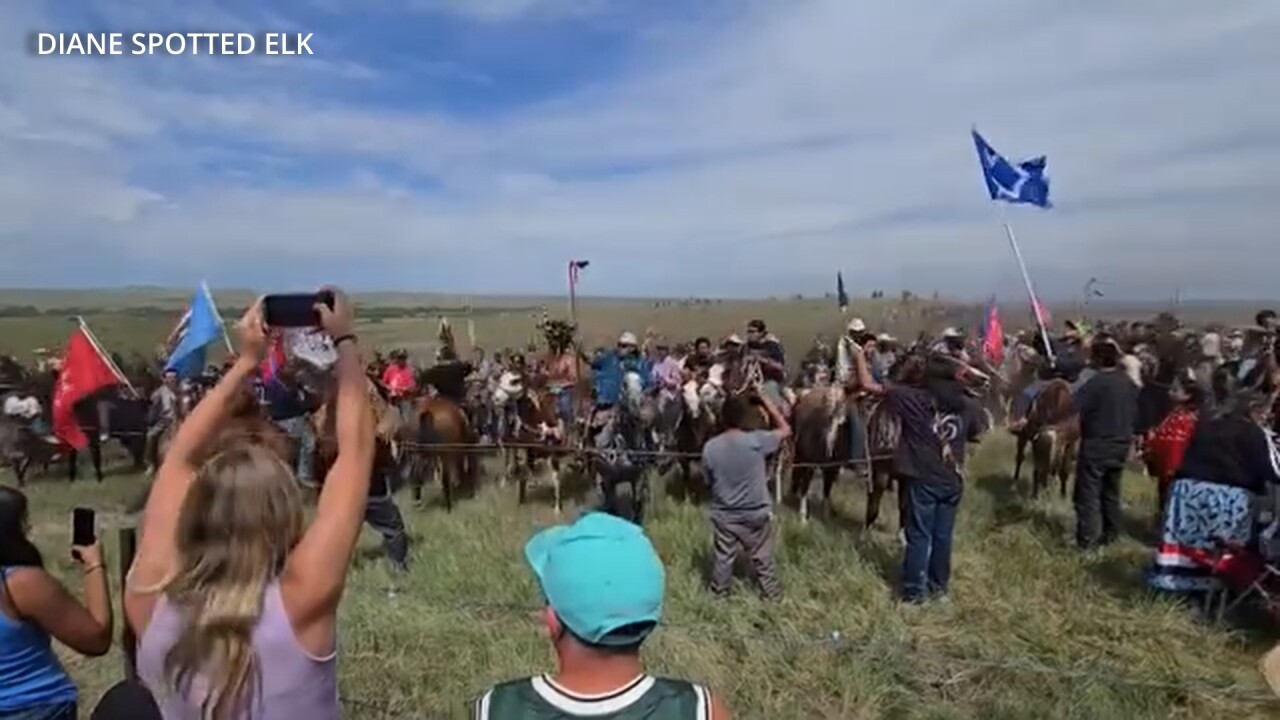
Espinosa traveled from Minnesota after helping organize youth runners who participated in the World Peace and Prayer Day journey to the battlefield. Hundreds of riders traveled for days before arriving this week.
For her, the anniversary was about bringing together Indigenous communities from across North America.
"Dakota, Nakota, Lakota people, we are all over, but we celebrate that relativity," Espinosa said. "We celebrate through our values, that connection that we have with each other."
Related: Battle of the Little Bighorn 150th anniversary draws hundreds of riders to Montana
She said the gathering stood out because tribal nations worked together to organize and participate in the commemoration.
"All the nations got together and they collaborated and they made it happen," she said. "When you go into the grounds, there are camps for all our nations and people together."
Others came to remember the battle from a different perspective.
David Mayfield of Medicine Lodge, Kansas, Mark Barfknecht of Norfolk, Virginia, and Cisco Lopez of Southern California reunited after years apart to attend the anniversary and Real Bird's Battle of Little Bighorn Reenactment. The three longtime members of Troop E, 7th U.S. Cavalry Ghost Patrol, a historical reenactment group founded at Knott's Berry Farm, have spent more than 40 years portraying cavalry soldiers.
The friends first met in Southern California in the 1980s while participating in reenactments and have since moved to different parts of the country. They spent the past year planning their reunion for the 150th anniversary.
"We've been looking forward for this for many months," Barfknecht said. "We're so happy we're here."
The three have largely retired from horseback reenactments but returned to support the younger riders participating in this year's Real Bird reenactment. Although they portray cavalry soldiers, they said they have never viewed the history as one-sided.

"We all believe that there are two sides to all these stories," Barfknecht said. "We've never focused on one half of the story ... whether it's shown a bad light on the cavalry or not, we focused on the whole story."
“That's how you learn. You learn from history," said Mayfield. “I was here for the 125th. I was here for the dedication of the Indian Monument, and it was nothing like this."
They added that one of the most meaningful parts of returning has been meeting local tribal members and hearing perspectives that are often missing from traditional accounts of the battle.
"We've met so many wonderful people who live here all year long and are part of basically the other half of the story," said Barfknecht.
“We all come from different walks of life, education, whatever. But that's our common denominator," added Lopez.
Visitors will continue commemorating the anniversary through the weekend. Events are scheduled through Saturday. The Real Bird reenactment happens Friday through Sunday, beginning at 1 p.m. each day.
