

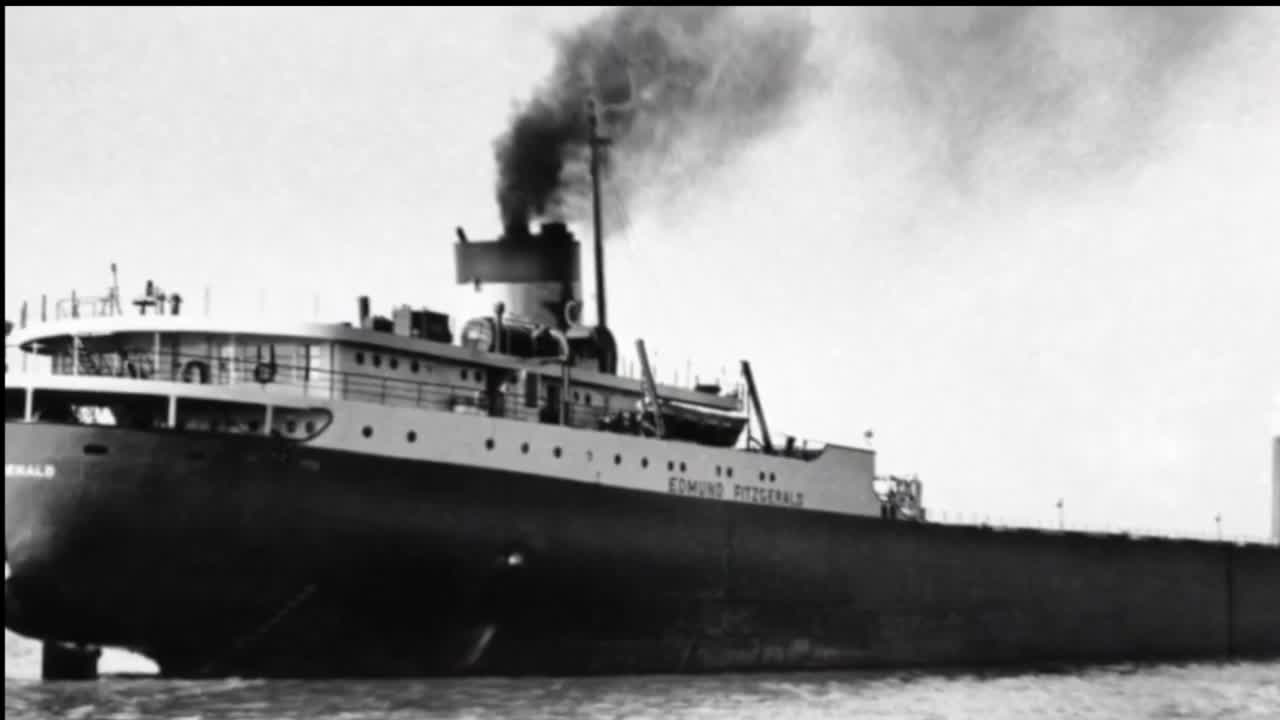


Some storms are so powerful and impactful that they create history and lore. In this week's Weather Wise, an unforgettable storm on Lake Superior sank the Edmund Fitzgerald ship on November 10th, 1975.
On November 9th, 1975, a new storm developed in the plains and rapidly intensified as it moved northeast towards the Great Lakes. At the time, it was unknown that this low pressure system would one day be described as a "storm of the century" after the extreme weather conditions claimed 29 lives from the SS Edmund Fitzgerald. That ship and another vessel, the Arthur M. Anderson, departed a port on western Lake Superior headed for Lake Michigan. Soon after, a gale warning was issued. The ships encountered the rapidly intensifying storm. Within 24 hours of departure, the storm produced 100mph winds, 30-40 foot waves regularly, with a few that reached an incredible 60 feet.
Equipment failures included both radars not working, an integral lighthouse losing power and light, and radio beacon malfuction. These failures left the captains to navigate "blind" during the storm. The ships took a northern route through Lake Superior, a common track for poor weather conditions. The ships remained in communication with each other for hours, but suddenly there was radio silence from the Edmund Fitzgerald. It is believed the ship sank quickly, taking all 29 souls aboard.
The storm was studied extensively, trying to identify different flow patterns on the Great Lakes that were not understood. As a result of this tragedy and the following research, forecasters gained a better understanding of the effects of deepening low pressure storms on the Great Lakes. The sinking of the Edmund Fitzgerald continues to be one of the most enduring maritime mysteries as the gales of November came early.
And now you're a little more Weather Wise.
Curtis Grevenitz
