

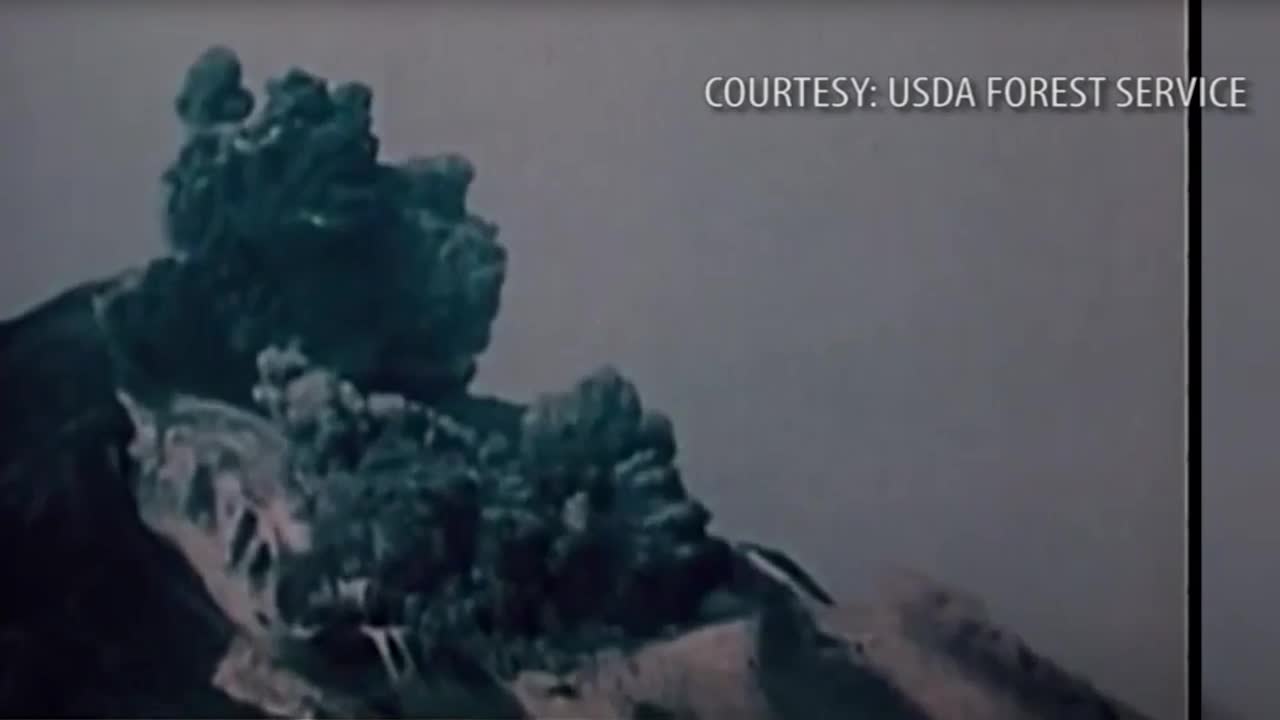


Forty-six years ago, the catastrophic eruption of Mount St. Helens in Washington began at 8:32 a.m. with a magnitude 5.1 earthquake that caused the entire north face to collapse. It would later be known to be the largest sublandslide in recorded history. Superheated gas, ash, and rock traveled at speeds exceeding 300mph with temperatures around 660 degrees.
The eruption column rose to 80,000 feet. The ash cloud traveled hundreds of miles, reaching Yakima, Washington, in 3 hours, and Spokane in about 5 hours. The ash cloud arrived in Montana early on May 19, 1980. According to eyewitness Montanans, the arrival of the ash was described as a "snowfall" of dark material. The ashfall accumulated several inches in parts of Montana, and some people claimed they had to repeatedly clean the ash off cars and homes. The Montana Department of Transportation used plows to clear some roads.
Some Montanans thought the incoming dark plume was a thunderstorm until the ash started to fall. The ash blocked the sun, reducing daytime temperatures. At night, it did the opposite, keeping temperatures 10-12 degrees warmer like a blanket. The combination of daytime cooling and nighttime warming created unusual temperature patterns for Washington, Idaho, and Big Sky Country.
Ash and dust remained part of the landscape for weeks until rain cleared the air and the ground.
