

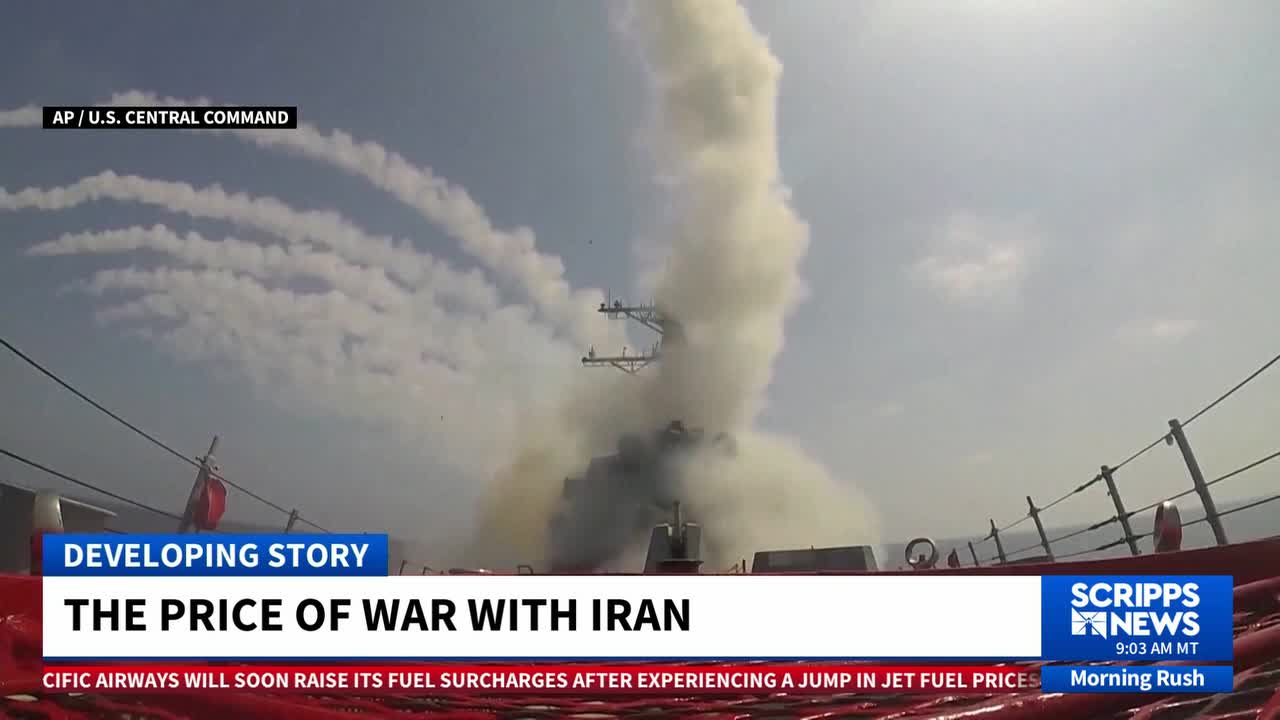


Congress may soon face pressure to fund the growing costs of the U.S. war with Iran, as military spending climbs into the billions of dollars.
The Pentagon has spent billions in the first week of the conflict, much of it from funds not already included in the defense budget.
Retired Col. Mark Cancian, a military analyst at the Center for Strategic and International Studies, estimated the first 100 hours of the war cost roughly $3.7 billion.
RELATED STORY | Pentagon says about 140 US troops wounded in Iran war
However, costs have declined as the U.S. military has gained control of Iranian airspace, allowing forces to rely more on shorter-range and less expensive weapons.
Cancian now estimates the conflict is costing about $500 million per day.
“We’re spending far, far less on munitions than we were in the first couple of days,” he said.
The White House has not yet formally requested additional funding from Congress. But sources told Scripps News that a request is expected as concerns grow about the supply of the United States’ most advanced weapons.
President Donald Trump acknowledged those concerns in a post on Truth Social, writing: “At the highest end, we have a good supply, but are not where we want to be.”
Cancian said some of the weapons being used are extremely expensive. A single Tomahawk cruise missile can cost more than $4 million.
RELATED STORY | Iran strikes U.S. allies as fighting threatens oil routes in Strait of Hormuz
The financial impact of the conflict extends beyond military spending.
GasBuddy estimates Americans are spending about $187 million more per day on gasoline than they were a week ago.
A separate analysis by investment firm Raymond James found that if oil prices remain at current levels, higher energy costs could erase any tax savings Americans might see this year from President Trump’s “One Big Beautiful Bill.”
