

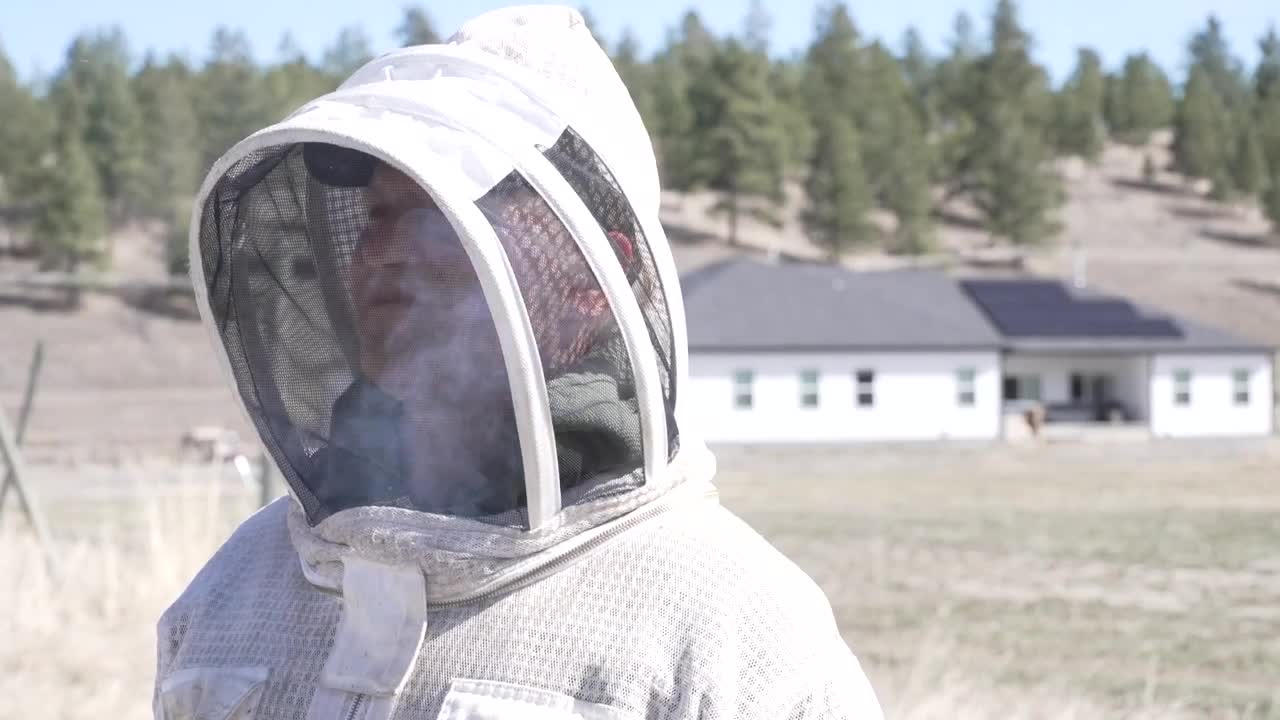


EAST HELENA — They are small and oftentimes overlooked, but here in Montana, bees do more than just produce honey; they are the backbone of our agriculture, and with the milder winter we saw, they have gotten a little boost this spring.
“When we have them, and they are strong, we are stronger,” Brian Dahm, a hobby beekeeper in East Helena, said.
(WATCH: Where Honey Meets Healing)
You may be wondering how Dahm got into beekeeping over a decade ago.
“It is one of those unexpected journeys, I would say, being a beekeeper and being a chaplain in the military,” Dahm shared. “I serve as the state chaplain with the Montana Army National Guard.”

Dahm served in Iraq in 2010 and 2011 and said, “It is an honor to be able to serve my country, my neighbors, and actually even on that deployment I talked to a few soldiers about beekeeping.”
His hives are something he says helps him step back from life’s challenges and reconnect with what really matters.
“It’s a source of refreshment, a source of being able to take a deep breath, be at work out here in the hives, enjoy the honey, of course, but it gives me the opportunity to take a deep breath and find in the midst of the hard times reasons to say hey, we are going to be alright,” Dahm shared.

Although many commercial apiaries send their bees to California for the winter, smaller operations like Honey Rock Apiary in East Helena have to fight for their hives through the bitterly cold winter, or in this season’s case, a mild winter.
Dahm said, “When you have hives that are struggling, you know I do all that I can on my side at least to help them survive and get through hard things, and I think that is probably something that God wired in me.”
Last season, none of Dahm’s hives survived, but as we opened the boxes, looking forward to pollination, seven of the ten were healthy.

Dahm exclaimed, “It brought a smile to my face, and i think it brings a smile to your face because it is so exciting to open up the hive, this first one here, and seeing the larvae, capped brood, and that tells me, hey, they have made it.”
In the acres behind the Dahms' house, the family plants sanfoine to support their bees so they can support the Treasure State.

“We depend on bees, whether it be from pollination of a crop to just enjoying stuff out of our garden we need pollinators,” Dahm said.
As for why Dahm thinks bees are all the buzz, “so if you want some honey on your toast or in your coffee, you should care about bees.”
